Greek island hopping works by buying individual ferry tickets between islands within the same geographic cluster, staying 3–5 nights per island, and keeping travel days to a minimum. In a 7-night trip you can comfortably cover 2–3 islands. In 14 nights, 3–4 islands is the realistic sweet spot - enough variety without the trip turning into a logistics exercise.
Key Takeaways
- Greece has six main island groups: Cyclades, Dodecanese, Ionian, Saronic, North Aegean, and Sporades. Stick to one group - mixing groups usually requires backtracking through Athens.
- In 7 nights, plan for 2–3 islands. In 14 nights, 3–4 islands. Every island change costs roughly half a day of holiday.
- There is no universal ferry pass for Greece. You buy individual tickets per route, either online via Ferryhopper or at the port.
- The Cyclades (Mykonos, Santorini, Paros, Naxos) have the most frequent connections and the most famous island names - but also the most crowds and the highest prices.
- The Sporades (Skiathos, Skopelos, Alonissos) offer a compact, green, lower-cost alternative with ferry rides under 2 hours between islands.
- High season (July–August) ferries should be booked weeks in advance. June and September give you much more flexibility and 30–40% lower accommodation prices.
How Does Greek Island Hopping Actually Work?
You book separate ferry tickets for each leg of your journey. There is no island-hopping pass for Greece, and not every island connects to every other island - you need to stay within a geographic cluster for the connections to make sense.
Each ferry ticket covers one crossing. Ferryhopper is the most reliable way to search, compare and book in advance - it shows all operators, times and prices in one place. Tickets for shorter or less popular routes can often be bought at the port on the day, but for July and August crossings on busy routes, booking ahead of time is strongly recommended.
Two types of vessels operate Greek island routes. Conventional ferries (Blue Star Ferries, Hellenic Seaways) are slower - typically 2–5 hours per crossing - but roomier, cheaper, and easier with luggage. High-speed catamarans and hydrofoils (SeaJets, Aegean Flying Dolphins) are faster but more expensive, louder, and bumpier in wind. For families or anyone prone to seasickness, the conventional ferry is often the better call.
The ferry schedule is seasonal. Most islands have good daily connections from May through September. From October onward, many routes drop to two or three crossings per week, and by November some smaller islands are nearly cut off.
What Are the Main Greek Island Groups?
Greece has six major island clusters. Each has a distinct character, and ferry connections generally run within a cluster rather than between them.
Here's how the main groups compare for an island-hopping trip:
| Island Group | Best-Known Islands | Character | Ferry Frequency | Best For |
|---|---|---|---|---|
| Cyclades | Mykonos, Santorini, Paros, Naxos | Whitewashed, iconic, exposed to meltemi wind | Daily, very frequent | First-timers after famous-name islands |
| Dodecanese | Rhodes, Kos, Patmos, Symi | History, Ottoman influence, Turkish border | Good in summer | Culture + beach mix, southern Aegean |
| Ionian | Corfu, Kefalonia, Zakynthos | Venetian-influenced, greener, rainier | Moderate | West coast access from Italy or Patras |
| Saronic | Hydra, Aegina, Spetses, Poros | Close to Athens, no cars on some islands | Excellent, year-round | Short breaks from Athens |
| North Aegean | Lesbos, Chios, Samos | Larger, quieter, near Turkey coast | Moderate | Off-the-beaten-track travellers |
| Sporades | Skiathos, Skopelos, Alonissos | Pine-covered, calm water, lush green | Good in summer | Beach-focused, relaxed pace, lower crowds |
The crucial rule: choose one group and stay in it. Mixing the Cyclades with the Ionian, or the Sporades with the Dodecanese, almost always means an overnight ferry or a flight back through Athens. The romantic idea of collecting islands from different clusters is where most itineraries go wrong.
See Wikipedia's overview of the Greek island chains for the full geographic breakdown.
How Many Islands Can You Visit in a Week?
In 7 nights, 2–3 islands is realistic. In 14 nights, 3–4 islands. Trying to squeeze more than that means spending a significant portion of your trip in transit rather than on a beach.
The maths are straightforward. Every island change involves: checking out of your accommodation, getting to the port, waiting for the ferry, the crossing itself (usually 1–3 hours within a cluster), arriving and getting to your next place. That's typically 4–6 hours of a day gone. Do it every three days and you've lost nearly half your trip to logistics.
A practical way to think about it:
- 3–5 nights on an island feels like an actual stay. You find your taverna, you know which beach suits you in the morning versus the afternoon, you start to slow down.
- 1–2 nights on an island is a transit stop. You see it, you don't feel it.
For a 7-night trip, the most common structure is: 3 nights on island 1, then 4 nights on island 2 - or 3+2+2 if you want a third stop and don't mind a faster pace.
For 14 nights, 4+4+3+3 across four islands within one group is comfortable. Most experienced Greece travellers land on 3–4 islands over two weeks as the ceiling before it starts feeling like work.
The Cyclades Route: The Most Popular Circuit
The Cyclades dominate most "Greek island hopping" content for a good reason: Mykonos, Santorini, Paros and Naxos are among the most recognisable islands in the world, connections are frequent, and the infrastructure for hopping is well-established.
A classic Cyclades itinerary looks like this: fly into Athens, ferry to Mykonos (or Paros), island-hop south through Naxos and Paros, end in Santorini, fly home from Santorini or return to Athens via ferry.
Honest trade-offs:
Cyclades strengths. The island names carry weight. Santorini's caldera and sunsets are genuinely spectacular. Mykonos has excellent restaurants and a nightlife culture unlike anywhere else in Greece. Naxos has PDO cheese, marble villages and 8 km of uninterrupted sand. Paros is the most balanced of the four - beaches, Old Town, watersports, calmer prices. Ferry connections are among the most frequent in the Aegean.
Cyclades weaknesses. The meltemi - a strong dry northerly wind - blows hard across the central Aegean from mid-July through August, making some beaches unswimmable for days at a time. July and August crowds on Mykonos and Santorini are intense: thousands of cruise ship passengers flood both islands daily. Prices in peak season reflect the demand. Accommodation on Santorini's caldera fills up 6–8 months in advance.
If you want the famous-name islands and don't mind the crowds, the Cyclades is the right call. Our guide to choosing a Greek island goes through the decision in detail for different travel styles.
The Sporades Route: The Relaxed Alternative
The Sporades - Skiathos, Skopelos and Alonissos - form a compact, green cluster off the Greek mainland's eastern coast. The ferry ride from Skiathos to Skopelos is 45–65 minutes; Skopelos to Alonissos is 5–30 minutes. You can cover all three in 8–10 days without any day feeling rushed.
The Sporades sit in the lee of the Pelion peninsula, which shelters them from the worst of the meltemi. The water on the south-facing coasts tends to stay calm and glassy well into peak summer - a practical advantage if you're travelling with children, older parents, or simply want to swim every day regardless of the weather. The pine forest that blankets all three islands (Skiathos is roughly 60% pine-covered) runs down to the beach on many bays, providing shade that the barren Cycladic landscape simply cannot match.
The group is connected by Hellenic Seaways, SeaJets and Aegean Flying Dolphins, with up to 38 ferry crossings per week between the islands in high season. The mainland departure points are Volos (about 3 hours from Athens by road) and Agios Konstantinos (about 2 hours from Athens).
Skiathos also has its own airport with direct summer flights from across northern Europe - the UK, Germany, the Netherlands, Scandinavia and beyond - which means you can fly directly in, island-hop the Sporades, and fly home without touching Athens at all. Our how to get to Skiathos guide covers all the routes.
The Three Sporades Islands at a Glance
| Island | Character | Best For | Ferry Time from Skiathos |
|---|---|---|---|
| Skiathos | 60+ beaches, pine forest, direct flights, most amenities | Beach variety, easy base, families | - |
| Skopelos | Mamma Mia filming locations, traditional villages, fewer beaches | Authenticity, walking, couples | 45–65 min |
| Alonissos | Greece's first marine park, pristine water, very quiet | Snorkelling, diving, total calm | 90–120 min |
For a deeper look at each island and how they compare, see our complete Sporades islands guide and the Skiathos vs Skopelos comparison.
A Sample 8-Night Sporades Itinerary
This is a reasonable template for a first Sporades trip. It prioritises time over speed, which is almost always the right call.
| Day | Where | What |
|---|---|---|
| Day 1 | Skiathos | Arrive (direct flight or ferry from mainland), settle in, first swim |
| Day 2 | Skiathos | Explore south coast beaches: Koukounaries, Banana, Vromolimnos |
| Day 3 | Skiathos | Boat trip to Lalaria beach and the sea caves (morning), Kastro ruins (afternoon) |
| Day 4 | Skopelos | Ferry (45–65 min). Skopelos Town Old Quarter, dinner at the harbour |
| Day 5 | Skopelos | Visit Glossa village and the Church of Agios Ioannis (Mamma Mia cliff chapel), swim at Stafylos |
| Day 6 | Alonissos | Ferry (25–30 min). Old Village (Hora) above the port, swim at Votsi or Steni Vala |
| Day 7 | Alonissos | Morning boat trip inside the National Marine Park (monk seals, dolphins) |
| Day 8 | Skiathos | Ferry back (90 min), afternoon swim, fly home next morning |
This leaves one full spare day built in - useful when a ferry runs late or you simply don't want to move. Our day trips from Skiathos guide covers the shorter excursions from Skiathos including boat-only beaches and the offshore islets.
What Are the Most Common Island-Hopping Mistakes?
The two most common mistakes are visiting too many islands (leading to a trip that's mostly transit) and underestimating ferry times between islands that look close on a map.
A few more worth knowing before you book:
Mixing island groups. Combining Mykonos with Skiathos, or Santorini with Corfu, sounds appealing until you look at the connections. These are different seas and different ferry networks. The "bridge" is almost always Athens - meaning a flight, an overnight, or a very long conventional ferry.
Booking non-refundable accommodation before you have your ferry tickets. Confirm your ferry route first, then book accommodation. Routes sell out in peak season, not the other way around.
Arriving at the port too close to departure. Greek port boarding can be chaotic in summer. Arrive 30–40 minutes before your scheduled departure, especially with luggage. For catamaran services, boarding is often stricter.
Treating the ferry as dead time. The conventional ferry ride across the Sporades - pine-covered islands appearing on the horizon, the water turning to that specific deep blue - is genuinely part of the trip. Bring a book and sit outside.
Forgetting to check wind forecasts in the Cyclades. In August, the meltemi can blow 5–7 out of 10 on the Beaufort scale for several days. Some catamaran services suspend in these conditions. This is less of an issue in the sheltered Sporades.
Sporades vs Cyclades: An Honest Head-to-Head
Neither route is objectively better. They suit different travellers.
| Factor | Cyclades | Sporades |
|---|---|---|
| Famous-name islands | Yes (Mykonos, Santorini) | No |
| Ferry frequency | Very high | Good in summer |
| Wind exposure | High (meltemi) | Low (sheltered by Pelion) |
| Landscape | Arid, whitewashed, volcanic | Green, pine-forested, lush |
| Crowds | High in July–August | Moderate |
| Price level | Higher | Lower, especially accommodation |
| Direct EU flights | Mostly via Athens | Yes, direct to Skiathos |
| Beach variety | Good | Excellent (60+ on Skiathos alone) |
| Water clarity | Good | Excellent (marine park at Alonissos) |
| Best for | First-timers wanting famous names | Repeat visitors wanting calm and green |
If you're visiting Greece for the first time and you've pictured Santorini sunsets and Mykonos nightlife for years, do the Cyclades. Those islands deliver what they promise.
If you've done the Cyclades before, or you want calm water, pine shade, fewer crowds and a trip that feels like a rest rather than a race, the Sporades are consistently underrated. You won't find the same Instagram recognition, but you will find genuinely clean water, empty beaches in September, and a pace that actually lets you decompress.
Our guide to how many days to spend in Skiathos covers what's realistic in different lengths of stay on the island itself.
When Is the Best Time to Island Hop in Greece?
June and September are the best months for Greek island hopping in 2026. You get warm sea temperatures (23–25°C), air temperatures around 25–30°C, much smaller crowds, and accommodation prices 30–40% lower than peak August.
July and August are the warmest and the most social, but also the most expensive, the most crowded, and - in the Cyclades especially - the most affected by meltemi winds. If August is your only option, plan around it: book accommodation and ferries well in advance, accept the heat, and focus on the Sporades where wind disruption is less of an issue.
May and early October extend the shoulder season nicely. The sea is cooler in May (around 20°C), but beaches are almost empty and prices are at their lowest. Late September and early October on Skiathos still see sea temperatures around 24°C with almost no crowds.
Our best Greek island for September guide covers the shoulder season case in more detail.
Frequently Asked Questions
How does Greek island hopping work?
Greek island hopping involves buying individual ferry tickets between islands within the same geographic cluster. There is no all-in ferry pass. Book tickets online via Ferryhopper or at the port, stay 3–5 nights per island, and plan for 2–3 islands in 7 days. Every island change costs roughly half a day, so fewer stops usually means a better trip.
How many Greek islands can you visit in a week?
Two to three islands in seven nights is realistic and comfortable. Three means roughly 2–3 nights per island, which is the minimum to feel settled anywhere. If you want to actually relax rather than just transit, two islands with 3–4 nights each is a better structure for a 7-night trip.
Is there a Greek island ferry pass?
No, there is no universal ferry pass for Greece in 2026. You purchase a separate ticket for each crossing. Ferryhopper is the most widely used booking platform for comparing routes, operators, times and prices across all Greek ferry companies.
What is the difference between the Cyclades and Sporades for island hopping?
The Cyclades (Mykonos, Santorini, Paros, Naxos) have more famous island names, very frequent ferry connections, and a dry, whitewashed, more exposed landscape. The Sporades (Skiathos, Skopelos, Alonissos) are green and pine-forested, more sheltered from the Aegean wind, less crowded and generally cheaper. The Cyclades are better for first-timers chasing famous names; the Sporades are better for calm beaches and a relaxed pace.
How far is it between the Sporades islands?
Skiathos to Skopelos takes 45–65 minutes by ferry. Skopelos to Alonissos takes 5–30 minutes depending on the port. The entire three-island chain is compact enough to cover comfortably in 8–10 days. Ferry crossings run up to 38 times per week between the islands in peak summer, operated by Hellenic Seaways, SeaJets and Aegean Flying Dolphins.
Can you fly directly to the Sporades?
Yes. Skiathos National Airport (JSI) receives direct flights from the UK, Germany, the Netherlands, Scandinavia and other European countries from May through October. This means you can fly directly into the Sporades without transiting Athens - a significant practical advantage over most other island groups, where Athens is almost always a required connection.
What ferry operators serve the Sporades?
Hellenic Seaways, SeaJets and Aegean Flying Dolphins are the main operators on the Sporades routes in 2026. Conventional ferries (Hellenic Seaways) are slower but cheaper and more comfortable for luggage; high-speed catamarans (SeaJets) are faster but more expensive and bumpier. Both operate from Volos and Agios Konstantinos on the mainland.
When should you book Sporades ferry tickets?
For July and August travel, book ferry tickets at least 2–3 weeks in advance for high-speed services. Conventional ferry routes have more capacity and can often be booked a few days before departure. In June and September, ferry tickets are rarely a problem to book close to travel dates. Use Ferryhopper to compare options.
Read next:
- Complete guide to the Sporades islands
- Day trips and island hopping from Skiathos
- Skiathos vs Skopelos: which Sporades island should you choose?
- How to get to Skiathos
- How many days in Skiathos: the itinerary guide
- Our full Skiathos travel guide
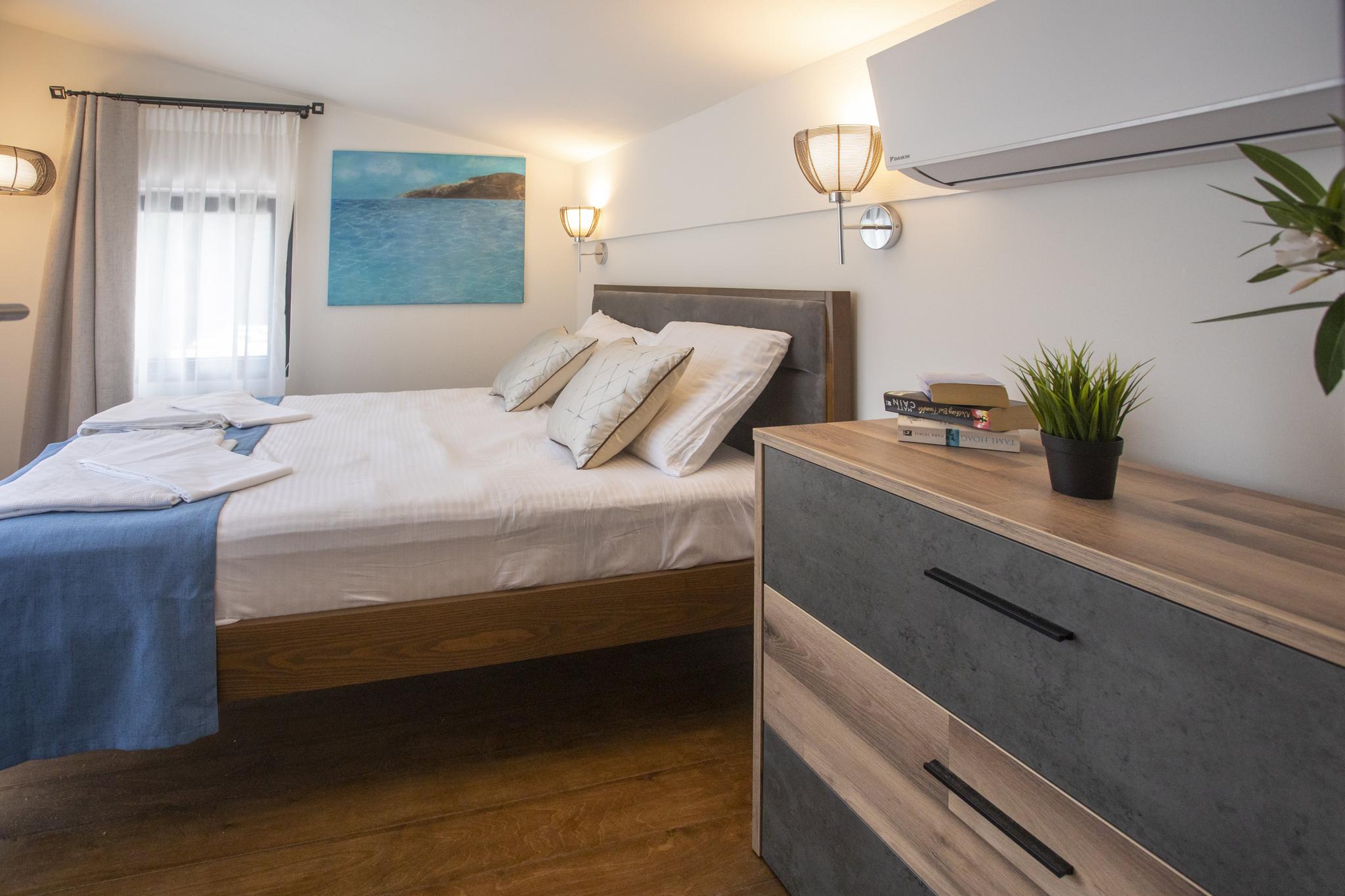
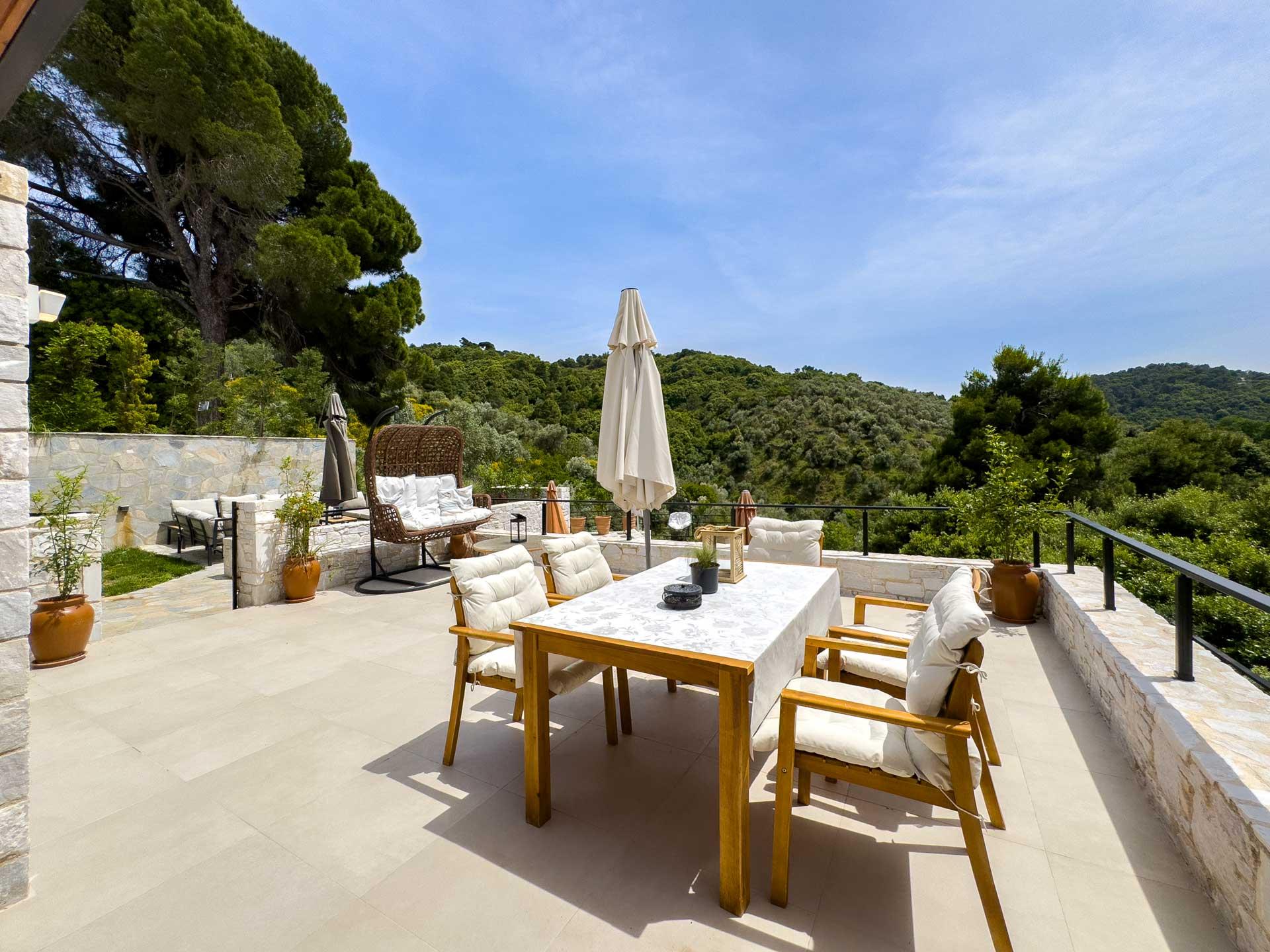
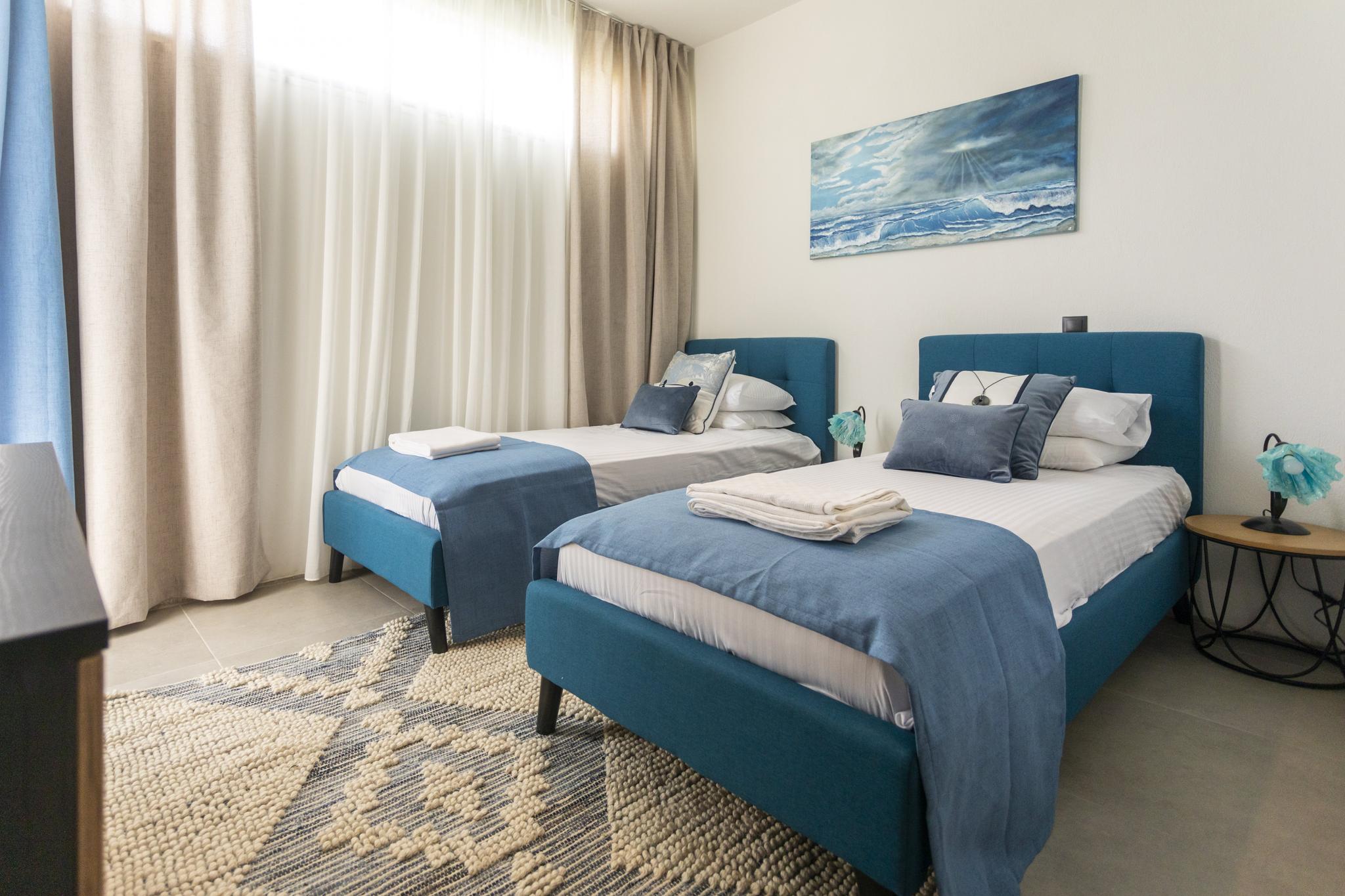
At Damari Luxury Villas, our two properties in the Kechria area of Skiathos make a natural base for a Sporades island-hopping trip. Both villas sleep up to 6 guests, have private pools and full kitchens, and sit 6 km from Skiathos port and airport - 15 minutes to your first ferry, 10 minutes to the nearest beach. Explore Villa Moondancer and Villa Whispering Pines or get in touch to talk through your 2026 itinerary.