The Greek phrases that matter on Skiathos are few and easy: kaliméra (good morning), yiá sas (hello), efharistó (thank you), parakaló (please, and you're welcome), signómi (excuse me) and ton logariasmó, parakaló (the bill, please). Stress the right syllable and you will be understood everywhere. Remember two traps: nai, pronounced "neh", means yes, and a quick upward tilt of the head means no.
Nobody on Skiathos expects visitors to speak Greek. English is the working language of the harbour, the car hire desks and almost every taverna. But after hosting more than 500 guests since 2019, we can tell you that the ones who make the effort with a few words get a different island: an extra plate of fruit, a better table, a longer conversation.
Mid-November, with the island quiet and most visitors planning for summer 2027, is the ideal time to learn them. You have months to practise, and if you are coming this winter or in early spring, you will be speaking to locals rather than seasonal staff, which makes the effort count for even more.
Key Takeaways
- Six phrases cover 90% of daily situations: kaliméra, yiá sas, efharistó, parakaló, signómi and ton logariasmó, parakaló.
- Greek is stressed on one syllable per word; getting the stress right matters more than perfect vowels.
- Nai ("neh") means yes and óchi ("OH-hee") means no - the opposite of what many English speakers guess.
- A downward nod means yes; an upward head tilt, sometimes with a tongue click, means no.
- Never push an open palm towards someone's face - the moutza is a serious insult in Greece.
- Greeting shopkeepers when you walk in, and saying goodbye when you leave, is expected rather than optional.
Which Greek Greetings Should You Learn First?
Learn kaliméra, kalispéra, yiá sas and efharistó first. These four cover arriving anywhere, greeting anyone and thanking them, and Greeks use them far more often than English speakers use their equivalents.
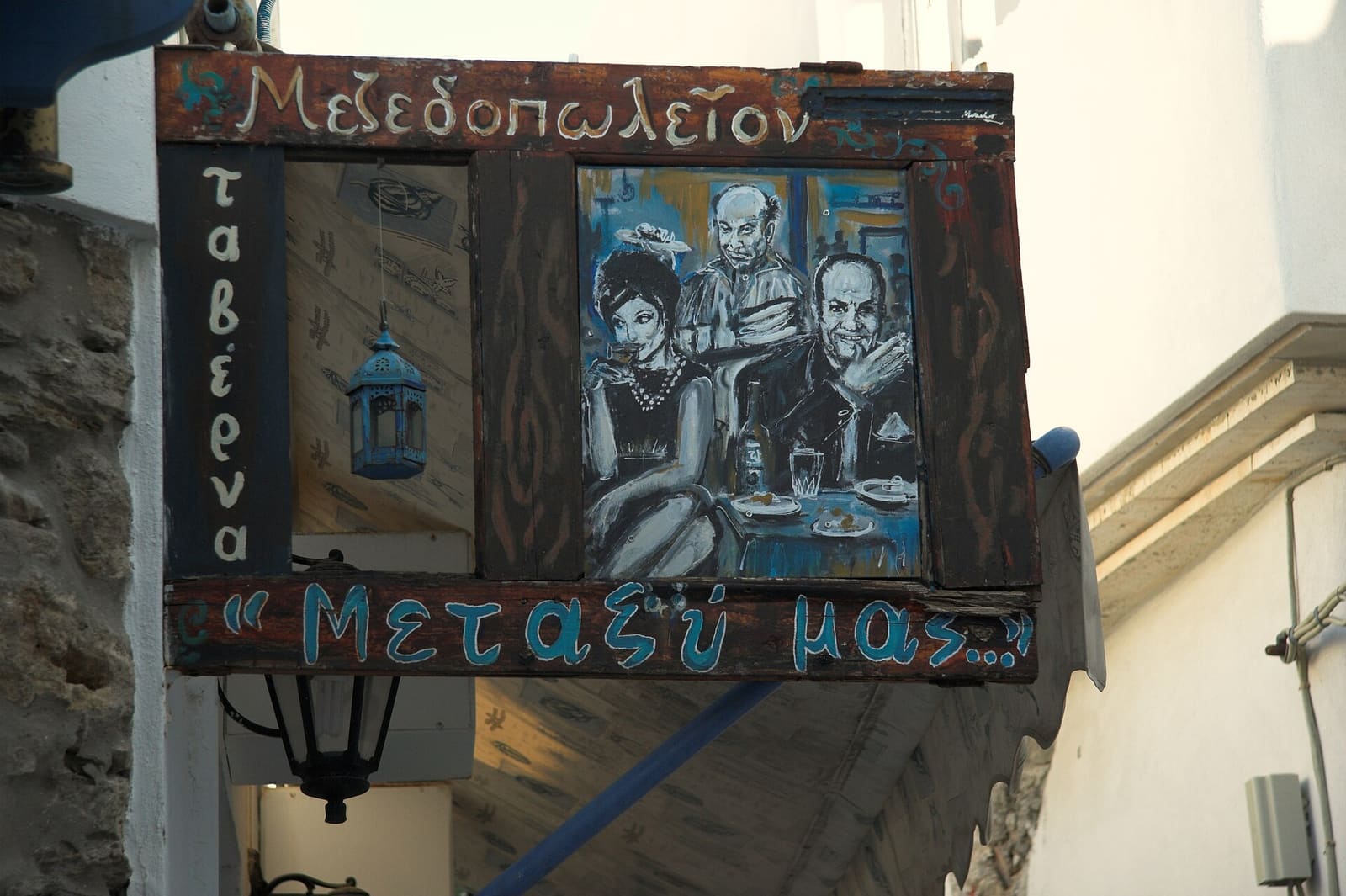
In the tables below, capital letters show the stressed syllable. Greek spelling marks it with an accent, and if you ever read a sign in the Greek alphabet, the accented vowel is the one to lean on. The transliterations follow common usage, which is also how you will see them on English menus around Skiathos Town.
| English | Greek (transliterated) | Say it like |
|---|---|---|
| Good morning (until early afternoon) | Kaliméra | kah-lee-MEH-rah |
| Good evening (from late afternoon) | Kalispéra | kah-lee-SPEH-rah |
| Good night (when leaving at night) | Kaliníchta | kah-lee-NEEKH-tah |
| Hello / goodbye (polite or plural) | Yiá sas | YAH-sahs |
| Hello / goodbye (informal, one person) | Yiá sou | YAH-soo |
| Thank you | Efharistó | ef-hah-ree-STOH |
| Thank you very much | Efharistó polý | ef-hah-ree-STOH poh-LEE |
| Please / you're welcome | Parakaló | pah-rah-kah-LOH |
| Excuse me / sorry | Signómi | see-GHNOH-mee |
| How are you? | Ti kánete? | tee KAH-neh-teh |
| Fine, good | Kalá | kah-LAH |
| Do you speak English? | Miláte angliká? | mee-LAH-teh ahn-glee-KAH |
| I don't understand | Den katalavéno | then kah-tah-lah-VEH-noh |
| OK, fine | Endáxi | en-DAHK-see |
A few notes that phrasebooks skip. Kaliméra is used well into the early afternoon, and switching to kalispéra after lunch is how locals mark the day. Kaliníchta is only for leaving at night, never for arriving. The "th" in "den" is soft, as in "this".
There are also small seasonal greetings that land beautifully. On the first day of each month, Greeks wish each other kaló mína (kah-LOH MEE-nah), "good month". In summer you will hear kaló kalokéri, "have a good summer", traded between shopkeepers and regulars as the season winds down. The next chance is 1 December, if you happen to be on the island this winter. Use either and expect a smile.
The Wikivoyage Greek phrasebook makes a reassuring point: Greek is close to phonetic, and simplified pronunciations remain perfectly intelligible. You do not need to master the throaty "gh" or "kh" sounds to be understood.
What Should You Say in a Greek Taverna?
Ask for a table with éna trapézi yia dýo (a table for two), order with tha íthela (I would like), toast with yiámas and finish with ton logariasmó, parakaló. Add kalí órexi (enjoy your meal) for your table.
The taverna is where Greek earns its keep. Menus in Skiathos Town are nearly always translated, but out in the villages or at a family place, the day's dishes may only be spoken aloud.
| English | Greek (transliterated) | Say it like |
|---|---|---|
| A table for two / four | Éna trapézi yia dýo / téssera | EH-nah trah-PEH-zee yah THEE-oh / TEH-seh-rah |
| The menu, please | To menoú, parakaló | toh meh-NOO, pah-rah-kah-LOH |
| I would like... | Tha íthela... | thah EE-theh-lah |
| Water | Neró | neh-ROH |
| A beer | Mía býra | MEE-ah BEE-rah |
| Half a kilo of white / red wine | Misó kiló lefkó / kókkino | mee-SOH kee-LOH lef-KOH / KOH-kee-noh |
| What do you recommend? | Ti protínete? | tee proh-TEE-neh-teh |
| Enjoy your meal | Kalí órexi | kah-LEE OH-rek-see |
| Cheers! | Yiámas! | YAH-mahs |
| It was delicious | Ítan polý nóstimo | EE-tahn poh-LEE NOHS-tee-moh |
| The bill, please | Ton logariasmó, parakaló | ton loh-gah-ree-az-MOH, pah-rah-kah-LOH |
Yes, house wine really is ordered by weight. "Misó kiló" means half a litre in practice, and it arrives in a metal jug or glass carafe. Our best restaurants in Skiathos guide tells you where to put it into practice.
One phrase deserves special attention: ítan polý nóstimo. Telling the cook or owner that the food was delicious, in Greek, is the single most effective thing you can say on a Greek island. It is also often the moment a small plate of fruit or a glass of something sweet appears, unasked, on the table.
On tipping, our money, cash and tipping guide covers the modest norms. The short version: round up or leave a little in cash.
How Do You Ask for Directions and Count in Greek?
Use poú íne...? (where is...?) followed by the place, and listen for aristerá (left), dexiá (right) and efthía (straight on). Numbers one to ten are worth learning for prices, table sizes and ferry times.
Skiathos is small - roughly 12 km by 6 km - but its roads and signposts can be inconsistent once you leave the main coastal road. Directions phrases are most useful for beaches, the port and, occasionally, a pharmacy.
| English | Greek (transliterated) | Say it like |
|---|---|---|
| Where is...? | Poú íne...? | POO EE-neh |
| The beach | I paralía | ee pah-rah-LEE-ah |
| The port | To limáni | toh lee-MAH-nee |
| The pharmacy | To farmakío | toh far-mah-KEE-oh |
| The toilet | I toualéta | ee too-ah-LEH-tah |
| The bus stop | I stási | ee STAH-see |
| Left / right | Aristerá / dexiá | ah-ree-steh-RAH / thek-SYAH |
| Straight on | Efthía | ef-THEE-ah |
| Near / far | Kontá / makriá | kohn-DAH / mah-kree-AH |
| How much is it? | Póso káni? | POH-soh KAH-nee |
Skiathos bus stops along the south coast are numbered, so the number you need is often more useful than the beach name. Here are the numbers that come up most:
| Number | Greek | Say it like |
|---|---|---|
| 1 | éna | EH-nah |
| 2 | dýo | THEE-oh |
| 3 | tría | TREE-ah |
| 4 | téssera | TEH-seh-rah |
| 5 | pénde | PEN-deh |
| 6 | éxi | EK-see |
| 7 | eptá | ep-TAH |
| 8 | ochtó | ohkh-TOH |
| 9 | ennéa | eh-NEH-ah |
| 10 | déka | THEH-kah |
| 20 | íkosi | EE-koh-see |
| 50 | penínda | peh-NEEN-dah |
| 100 | ekató | eh-kah-TOH |
The "d" in dýo and déka is soft, like the "th" in "this". It is the most common slip visitors make, and one locals rarely correct because they understand you anyway.
Why Does Nai Mean Yes, and Which Gestures Matter?
Nai, pronounced "neh", means yes, and óchi means no. Greek body language reinforces the confusion: a slight downward nod means yes, while an upward tilt of the head, often with raised eyebrows and a tongue click, means no.
This catches out almost every first-time visitor. You ask if the taverna has a table, the waiter says "neh" and tilts his head down slightly, and your brain hears "nay". He is saying yes.
The no gesture is even more misleading. The head goes up, the eyebrows lift, sometimes the eyes close briefly, and there is often a soft "tsk". Because the head naturally drops back to neutral afterwards, it can look like a nod. If you are unsure, ask again in English. Nobody minds.
The gesture to avoid
The moutza - an open palm with fingers spread, pushed towards someone's face - is one of the rudest gestures in Greece, with roots going back to Byzantine public shaming. Two hands doubles the insult. As Islands.com notes, what many visitors think of as a "stop" sign or the number five can read the same way.
In practice, a friendly wave across a street is fine. The issue is a flat palm thrust towards a person, particularly a driver who has just cut you up on the road to Koukounaries. When signalling five fingers for a table, keep your palm facing you.
Other signals you will see
- A hand rotated at the wrist with fingers spread: "what?" or "what's going on?"
- A small writing motion in the air: "the bill, please" - universally understood in tavernas.
- Tapping the chest with an open hand: a thank-you or "it's on me", often seen when someone insists on paying.
- Siga siga (slowly, slowly): not a gesture but an attitude. You will hear it said with a downward patting motion of the hand.
What Greek Etiquette Should Visitors on Skiathos Know?
Greet before you ask, dress modestly in churches and monasteries, expect long unhurried meals, and never rush a table. Greeks value warmth and courtesy over formality, and small gestures of politeness carry real weight on an island this size.
Greet first, then ask
Walking into a bakery or a shop on Papadiamantis Street and launching straight into a request in English reads as abrupt. A kaliméra or kalispéra first, and a yiá sas on the way out, is the local norm. It costs two words and changes the tone of everything that follows. Our Skiathos Town guide covers the streets where those conversations are most likely to happen.
Churches and monasteries
Skiathos has dozens of chapels and two working monasteries open to visitors. Cover shoulders and knees, keep voices low, and do not photograph services. Some monasteries provide wraps at the entrance. Our monasteries and culture guide has the visiting detail for Evangelistria and Kounistra.
Time and the midday pause
Many smaller, non-tourist shops close for a few hours in the early afternoon, and dinner starts later than northern Europe expects, often around 21:00. Our 20 things to know before visiting Skiathos covers the daily rhythm in more detail.
Hospitality runs both ways
If a neighbour, shopkeeper or taverna owner offers you something - a coffee, a few figs, a glass of tsipouro - accept it graciously. Refusing outright can feel like a rebuff. A warm efharistó polý is the right answer.
That spirit carries into how we host. At Damari, our host Tolis welcomes every guest personally at check-in on the Kechria hillside, about 6 km from Skiathos Town, and he is very happy to be your first Greek-language practice partner before you head to the harbour. In summer, guests at Villa Moondancer often tell us they rehearse their taverna phrases on the terrace over a sunset drink before driving down for dinner.
Frequently Asked Questions
Do I need to speak Greek in Skiathos?
No. English is widely spoken in tavernas, shops, car hire offices and anywhere that serves visitors. A handful of Greek words still makes a noticeable difference, especially with older residents, in village kafeneia and in the shoulder season when you meet more locals than tourists.
How do you say thank you in Greek?
Efharistó, pronounced ef-hah-ree-STOH, with the stress on the last syllable. For extra warmth, say efharistó polý (poh-LEE), meaning thank you very much. The usual reply is parakaló, which doubles as please and you're welcome.
Does nai mean yes or no in Greek?
Nai means yes. It is pronounced roughly "neh", which sounds like "nay" to English ears and causes endless confusion. No is óchi, pronounced OH-hee. When in doubt, add a clear thumbs up or repeat the word in English.
What is the difference between yiá sou and yiá sas?
Both mean hello or goodbye. Yiá sou is informal and used with one person you know, a child or someone your own age in a relaxed setting. Yiá sas is polite or plural. As a visitor, yiá sas is always the safe choice.
How do you ask for the bill in Greek?
Say ton logariasmó, parakaló (ton loh-gah-ree-az-MOH, pah-rah-kah-LOH). In Greece the bill rarely arrives unprompted because hurrying a table is considered rude. A small writing gesture in the air to catch the waiter's eye also works.
Which hand gestures should I avoid in Greece?
Avoid pushing an open palm with spread fingers towards someone's face. Called the moutza, it is one of the rudest gestures in Greek culture. Showing five fingers at a distance is usually understood, but keep your palm facing inwards when indicating the number five.
Put your phrases to work: Our best restaurants in Skiathos guide picks the tavernas worth booking.
Around town: The Skiathos Town guide covers Papadiamantis Street, the Old Port and the backstreets.
Getting your bearings: Our location page shows how the Kechria hillside connects to Skiathos Town, the airport and the north coast beaches.
At Damari Luxury Villas, the first Greek word most guests hear is a warm yiá sas from our host Tolis at the door. Our two private villas in the Kechria area sit among pine forest and olive groves, each with a private infinity pool, fully equipped kitchen, and outdoor dining terraces made for long, unhurried evenings. It is the perfect place to practise kalí órexi before you try it on a taverna owner. Explore our villas or contact us to start planning your 2027 stay.
Frequently asked questions
Do I need to speak Greek in Skiathos?
No. English is widely spoken in tavernas, shops, car hire offices and anywhere that serves visitors. A handful of Greek words still makes a noticeable difference, especially with older residents, in village kafeneia and in the shoulder season when you meet more locals than tourists.
How do you say thank you in Greek?
Efharistó, pronounced ef-hah-ree-STOH, with the stress on the last syllable. For extra warmth, say efharistó polý (poh-LEE), meaning thank you very much. The usual reply is parakaló, which doubles as please and you're welcome.
Does nai mean yes or no in Greek?
Nai means yes. It is pronounced roughly 'neh', which sounds like 'nay' to English ears and causes endless confusion. No is óchi, pronounced OH-hee. When in doubt, add a clear thumbs up or repeat the word in English.
What is the difference between yiá sou and yiá sas?
Both mean hello or goodbye. Yiá sou is informal and used with one person you know, a child or someone your own age in a relaxed setting. Yiá sas is polite or plural. As a visitor, yiá sas is always the safe choice.
How do you ask for the bill in Greek?
Say ton logariasmó, parakaló (ton loh-gah-ree-az-MOH, pah-rah-kah-LOH). In Greece the bill rarely arrives unprompted because hurrying a table is considered rude. A small writing gesture in the air to catch the waiter's eye also works.
Which hand gestures should I avoid in Greece?
Avoid pushing an open palm with spread fingers towards someone's face. Called the moutza, it is one of the rudest gestures in Greek culture. Showing five fingers at a distance is usually understood, but keep your palm facing inwards when indicating the number five.
Sources & last checked
- Wikivoyage - Greek phrasebook (Pronunciation guidance and core travel phrases)
- Moutza (Wikipedia) (Background on the open-palm gesture and its meaning in Greece)
- Islands.com - gesture to avoid in Greece (Practical advice on the moutza for visitors)
- Greek alphabet (Wikipedia) (Reference for reading signs and menus)