Greece was ranked the leading country in the world for babymoon travel in 2026. Rhodes took first place in Europe, with Naxos and Corfu also landing in the top ten, judged on premium accommodation, beach quality, dining and moderate temperatures. It's a fair result. Those are genuinely lovely islands and none of them is a bad choice.
But the ranking measures what an island has, not what it asks of you. And at 24 weeks pregnant, what an island asks of you is the thing that decides whether the trip feels restorative or exhausting. Rhodes is 78km long, which means a transfer that can run well over an hour. Naxos usually involves a ferry leg or a change in Athens. Corfu Town is beautiful and largely built on a slope. Skiathos didn't appear on any list — and on the criteria that actually matter when you're carrying an extra stone and a bladder the size of a walnut, it quietly beats all three.
Key Takeaways
- Greece ranked first globally as a babymoon country for 2026; Rhodes led Europe, with Naxos and Corfu in the top ten
- The standard babymoon window is the second trimester, roughly weeks 14–27
- For Greece, aim for late May, June or September: highs of around 24–28°C rather than August's low thirties
- Skiathos airport is about 15 minutes from most of the island, with no ferry connection needed and no stepped hill villages to negotiate
- The south coast has a run of shallow, calm, easy-entry beaches — Achladies, Troulos, Agia Paraskevi
- A villa beats a hotel on the three things that matter most: food control, uninterrupted rest and a pool with nobody else in it
- Check your airline's pregnancy cut-off before booking; most want a letter from around 28 weeks and stop at roughly 36
When to Go: The Second Trimester Meets the Greek Shoulder Season
The two calendars line up better than you'd expect. The conventional babymoon window is the second trimester — weeks 14 to 27 — when nausea has usually settled and you're still moving comfortably. Greek travel guidance points to the same shoulder months for the same reason: heat is the variable that turns a pleasant trip into a difficult one.
August on Skiathos regularly pushes into the low thirties, and pregnancy makes you noticeably less tolerant of it. The alternative months are genuinely better, not a consolation prize.
| Month | Typical daytime high | Sea temp | Character |
|---|---|---|---|
| Late May | 23–25°C | 20–21°C | Green island, quiet, sea still fresh |
| June | 26–28°C | 23–24°C | The best balance of warmth and calm |
| July–August | 30–33°C | 25–26°C | Hot, busy, hardest work when pregnant |
| September | 26–28°C | 24–25°C | Warmest sea of the year, crowds gone |
| Early October | 22–24°C | 22–23°C | Soft light, some tavernas closing |
September is the one we'd point most parents-to-be towards. The sea has absorbed a full summer of heat and is at its warmest, the airport is calm, and restaurant tables no longer need booking days ahead. Our September guide covers the month in detail, and the month-by-month weather and sea temperature breakdown is worth a look if you're choosing between dates.
Why Short Logistics Beat a Higher Ranking
The single biggest advantage Skiathos has over the ranked islands is the length of the journey from your seat on the plane to lying down.
There are direct seasonal flights to Skiathos from the UK, Germany, the Netherlands and Scandinavia, so most European couples arrive without a change. The airport sits immediately beside Skiathos Town, and the island measures roughly 12km by 6km. From the terminal to our villas in the Kechria area is around 15 minutes by car. Nowhere on the island is more than about 20 minutes away.
Compare that with the alternatives:
- Rhodes: large island, transfers to the south or west coast can exceed an hour after landing
- Naxos: typically a ferry from Athens or Mykonos, or a small domestic aircraft with a change
- Corfu: reasonable airport access, but the old town is stairs, cobbles and slopes
- Santorini: caldera villages are built as staircases; it is a poor fit for late pregnancy
None of that makes those islands bad. It makes them tiring, and tiredness is the currency you're short of. Our guide to getting to Skiathos covers the flight routes and the ferry option from Volos if you'd rather not fly at all — worth considering if you're near an airline cut-off.
One warning specific to Skiathos: the runway approach over the Kalamaki channel is famous, and the final descent can feel dramatic. It's routine for the pilots and perfectly safe, but if turbulence bothers you, an aisle seat and a heads-up help.
Beaches, Walks and the Gentle Version of a Greek Holiday
Skiathos suits a slower itinerary better than most islands because the good stuff is close and flat.
The south coast is the pregnant traveller's coast. Achladies has shallow, gradual entry and full facilities. Troulos is white sand with a gentle slope and summer lifeguards. Agia Paraskevi is long enough that you'll find a quiet stretch even in high season. All three sit on the single south-coast bus route, which runs every 10 to 15 minutes for €2–3 — a genuinely useful option on days when you'd rather not drive.
Skip the boat trip to Lalaria if the sea is anything but flat; the 40-minute crossing each way in chop is not the memory you want. On calm days a half-day trip around Tsougria or a short caique to a sheltered bay is lovely, and most operators will let you check conditions the morning of.
For walking, the Skiathos Town harbourfront is level, shaded in parts, and about as pleasant an evening stroll as Greece offers — Papadiamantis Street into the Old Port, ice cream, boats, done. The pine forest tracks inland from Kechria give you shade and soft ground rather than baking sand, which matters more in a Greek September than it sounds. What we'd avoid: the Kastro footpath (30–35 minutes each way, steep and uneven) and the longer hill routes above Evangelistria.
Our villas sit on the Kechria hillside among pine forest and olive groves, which means the walking immediately around you is quiet, green and shaded — a real advantage over a coastal hotel strip where the only stroll is along a hot road.
Eating Well and Safely in Greek Tavernas
Greek cooking is unusually pregnancy-friendly, because so much of it is slow-cooked vegetables and thoroughly grilled protein.
Safe and abundant: grilled chicken and lamb, well-cooked fish, gigantes (baked butter beans), briam, gemista, moussaka, lentil soup, horta (boiled greens), tzatziki made with pasteurised yoghurt, and good bread. This is a cuisine where the vegetarian starters are the best part of the menu anyway.
What to leave: raw or lightly cured seafood, undercooked octopus, unpasteurised soft cheeses, pâté-style spreads, and anything sitting warm on display. Most Greek feta sold commercially is pasteurised, but tavernas sometimes serve local unpasteurised cheese, so it's worth asking — "einai pasteriomeno?" gets you an honest answer.
The practical fix is a kitchen. Being able to keep fruit, yoghurt, cheese and cold water in your own fridge, and cook something plain when nothing on a menu appeals, removes a low-level anxiety that runs through a lot of pregnancy holidays. Our restaurant guide covers where to eat when you do go out.
Villa or Hotel: What Actually Changes When You're Pregnant
Every argument for a villa gets stronger during pregnancy.
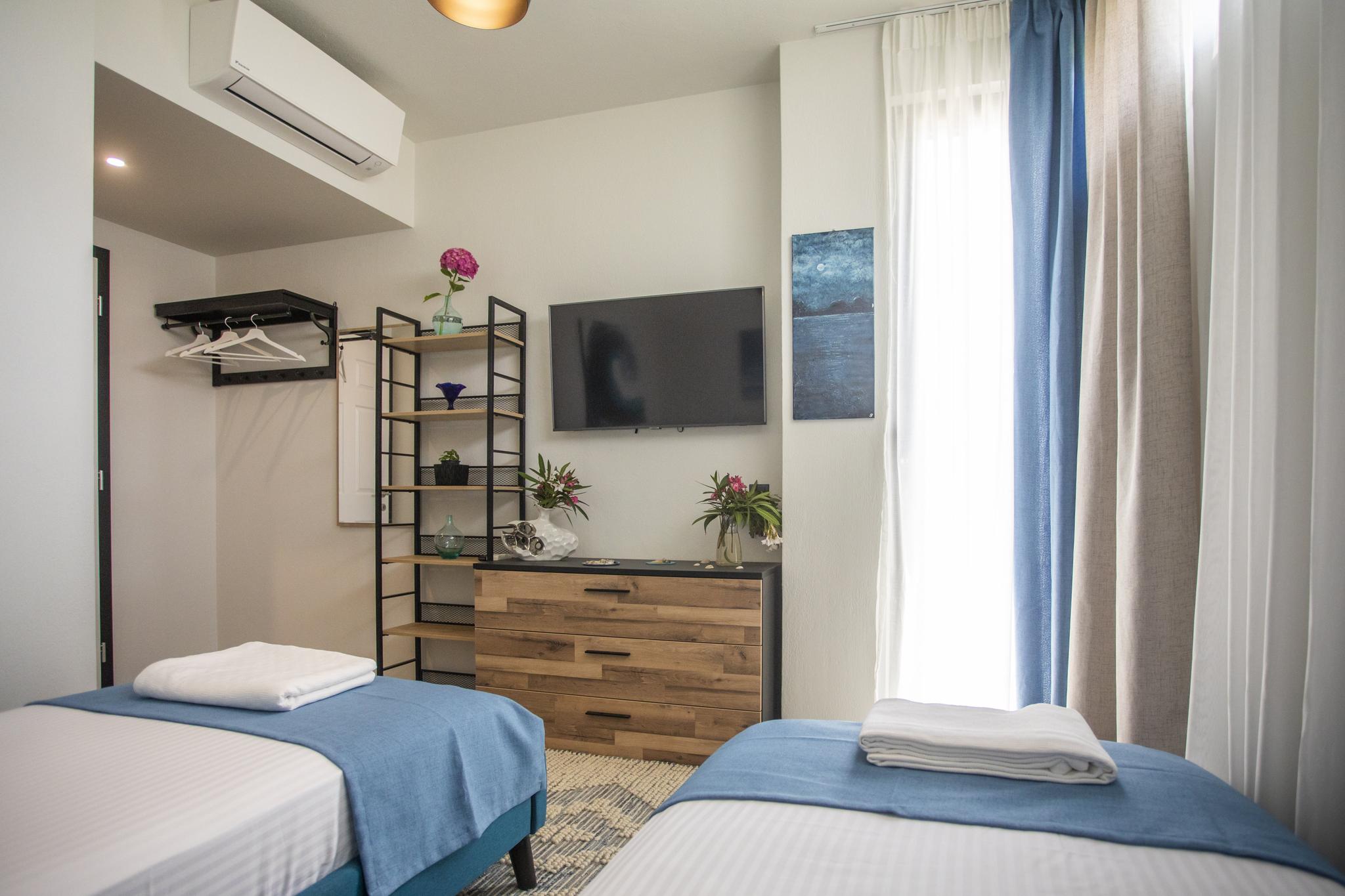
You wake three or four times a night. In a hotel that's a shared corridor and a lift. In a villa it's four steps to your own bathroom. You want to swim at 7am before the heat arrives, or float for an hour without an audience — a private infinity pool does that; a hotel pool with reserved loungers does not. You want the air conditioning at the temperature you find bearable, not a compromise with the room next door.
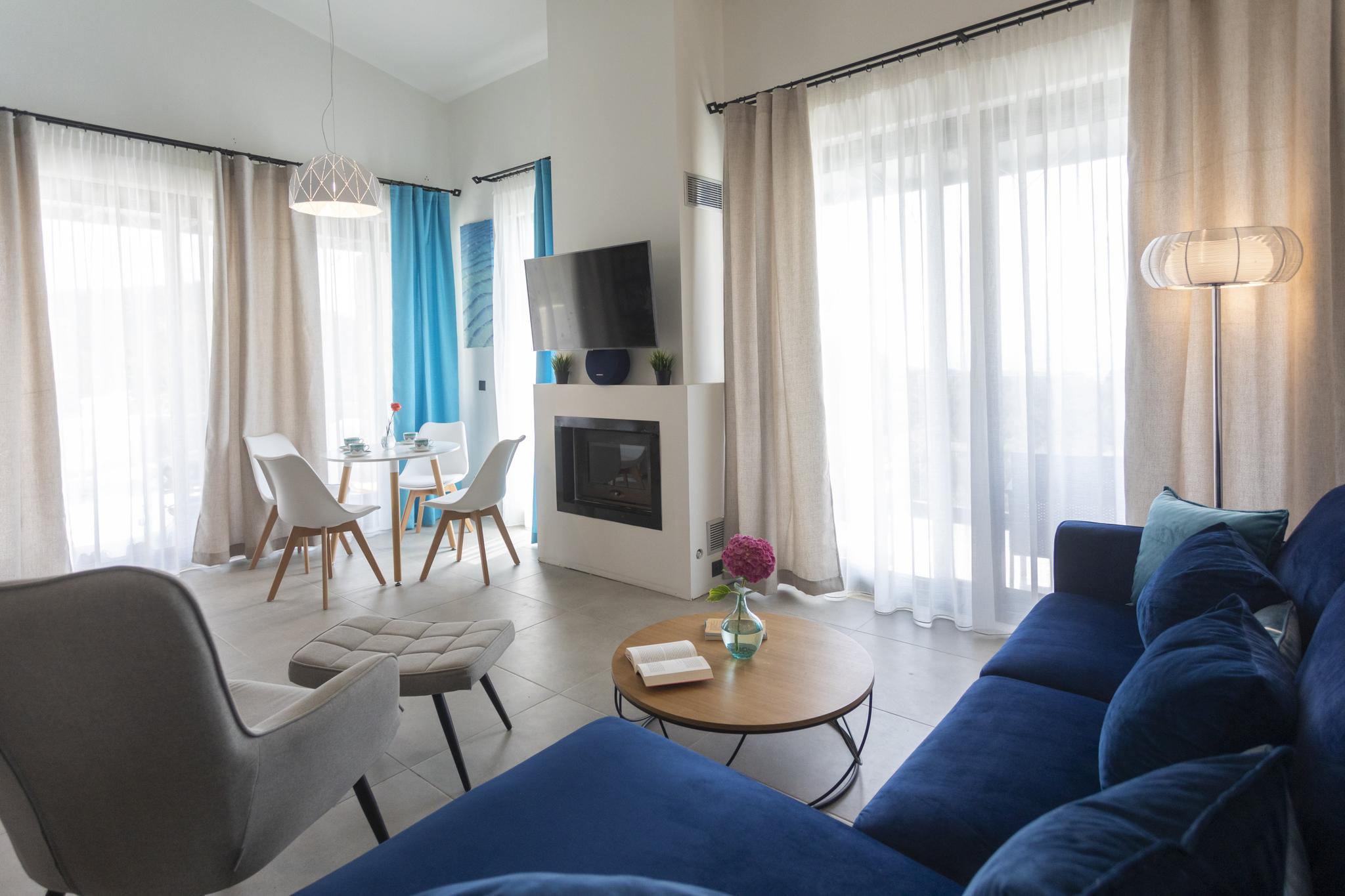
Both Villa Moondancer and Villa Whispering Pines have fully equipped kitchens, private infinity pools, BBQ and outdoor dining areas, and enough shade to spend a whole afternoon outside without cooking. The amenities page lists the full specification.
To be fair to hotels: you don't cook, you don't shop, and a spa with prenatal treatments on site is a real perk that a villa cannot replicate. If you want to be looked after completely and don't mind sharing space, a good five-star resort is a legitimate choice. Our villa versus hotel comparison sets out both sides properly. For most couples on a babymoon, though, the villa's quiet wins.
The Practical Checklist Before You Book
- Airline cut-off. Check your carrier, in writing. The common pattern is a letter from a doctor or midwife confirming your due date and fitness to fly from around 28 weeks, with travel refused from roughly 36 weeks for a single pregnancy and earlier for twins. Rules differ between airlines and change.
- Insurance. Standard travel insurance often excludes pregnancy-related claims. Buy a policy that names pregnancy cover explicitly, and check the gestational limit. The NHS travelling in pregnancy guidance is a sensible starting point.
- GHIC or EHIC. Free to apply, covers state healthcare in Greece on the same terms as a local. It is not a substitute for insurance — see the Foreign Office advice for Greece.
- Maternity notes. Carry them. Paper or an accessible digital copy.
- Medical care on the island. Skiathos has a health centre in Skiathos Town plus pharmacies. It handles routine and urgent care, not obstetrics; serious cases go to the mainland at Volos or Larissa. That's normal for a small Greek island — factor it into how late in pregnancy you're willing to travel.
- Timing your booking. Shoulder-season villas on Skiathos go early, particularly September. Reserve well ahead if your window is fixed by a due date.
Frequently Asked Questions
Is Greece a good babymoon destination?
Yes. Greece was ranked the leading country for pregnant travellers in 2026, with Rhodes taking first place in Europe and Naxos and Corfu also placing in the top ten. The ranking weighted premium accommodation, beach quality, dining and moderate temperatures — all areas where Greece scores well outside the peak summer heat.
When is the best time for a babymoon in Greece?
Most guidance points to the second trimester, roughly weeks 14 to 27, when morning sickness has usually eased and you are still comfortably mobile. For Greece specifically, May, June and September are the sweet spot: daytime highs of around 24–28°C rather than August's low thirties, warm sea and thinner crowds.
Why choose Skiathos over Rhodes, Naxos or Corfu for a babymoon?
Logistics. Skiathos airport sits about 15 minutes from most of the island, so you go from aircraft to villa in under half an hour with no ferry leg. Rhodes and Corfu are far bigger islands with long transfers, and Naxos usually involves a ferry connection or a domestic flight change. When you're pregnant, the hours you don't spend in transit are the whole point.
Until how many weeks pregnant can you fly to Greece?
Rules vary by airline, so check yours directly before booking. As a general pattern, carriers ask for a doctor's or midwife's letter from around 28 weeks and stop accepting single-pregnancy passengers at roughly 36 weeks, often earlier for twins. Confirm in writing and carry your maternity notes.
Is Greek food safe during pregnancy?
Most of it, yes. Well-cooked staples like grilled meat and fish, gigantes, briam, moussaka, lentil soup and horta are straightforward. What to skip is the usual list: unpasteurised soft cheeses, undercooked or raw fish and seafood, pâté-style spreads, and anything that's been sitting out. Ask whether the feta is pasteurised — many Greek tavernas use pasteurised feta, but it's worth confirming.
Are there medical facilities on Skiathos?
Skiathos has a health centre in Skiathos Town for routine and urgent care, plus pharmacies. It is not a maternity hospital — anything serious is transferred to Volos or Larissa on the mainland. Bring a GHIC or EHIC and, separately, travel insurance that explicitly covers pregnancy and any complications.
Is a villa or a hotel better for a babymoon?
A villa, in most cases. You get a kitchen for food control and odd-hour cravings, a pool you never have to share or reserve a lounger at, air conditioning you set yourself, and no walk down a corridor when you need the bathroom at 4am. Hotels win on room service and on-site spa treatments; a villa wins on rest.
Travelling as a couple first: our honeymoon and private villa guide and our best Greek islands for couples in 2026 cover the same island from a two-people-only angle.
Coming back with the baby: we've written a full Skiathos with a baby or toddler guide — the beaches, buggy routes and practicalities change more than you'd think.
Choosing where to stay: the villa versus hotel comparison is the honest version, including where hotels genuinely win.
At Damari Luxury Villas, we've hosted more than a few couples on their last trip as two, and the thing they mention afterwards is the quiet. Our two private villas in the Kechria area sit among pine forest and olive groves, each with a private infinity pool, fully equipped kitchen, and shaded outdoor dining with a BBQ — around 15 minutes from both the airport and Skiathos Town, so the journey ends almost as soon as you land. No crowded pool, no corridors, no compromises on temperature or timing. Explore our villas or contact us to talk through dates that fit your trimester.
Frequently asked questions
Is Greece a good babymoon destination?
Yes. Greece was ranked the leading country for pregnant travellers in 2026, with Rhodes taking first place in Europe and Naxos and Corfu also placing in the top ten. The ranking weighted premium accommodation, beach quality, dining and moderate temperatures — all areas where Greece scores well outside the peak summer heat.
When is the best time for a babymoon in Greece?
Most guidance points to the second trimester, roughly weeks 14 to 27, when morning sickness has usually eased and you are still comfortably mobile. For Greece specifically, May, June and September are the sweet spot: daytime highs of around 24–28°C rather than August's low thirties, warm sea and thinner crowds.
Why choose Skiathos over Rhodes, Naxos or Corfu for a babymoon?
Logistics. Skiathos airport sits about 15 minutes from most of the island, so you go from aircraft to villa in under half an hour with no ferry leg. Rhodes and Corfu are far bigger islands with long transfers, and Naxos usually involves a ferry connection or a domestic flight change. When you're pregnant, the hours you don't spend in transit are the whole point.
Until how many weeks pregnant can you fly to Greece?
Rules vary by airline, so check yours directly before booking. As a general pattern, carriers ask for a doctor's or midwife's letter from around 28 weeks and stop accepting single-pregnancy passengers at roughly 36 weeks, often earlier for twins. Confirm in writing and carry your maternity notes.
Is Greek food safe during pregnancy?
Most of it, yes. Well-cooked staples like grilled meat and fish, gigantes, briam, moussaka, lentil soup and horta are straightforward. What to skip is the usual list: unpasteurised soft cheeses, undercooked or raw fish and seafood, pâté-style spreads, and anything that's been sitting out. Ask whether the feta is pasteurised — many Greek tavernas use pasteurised feta, but it's worth confirming.
Are there medical facilities on Skiathos?
Skiathos has a health centre in Skiathos Town for routine and urgent care, plus pharmacies. It is not a maternity hospital — anything serious is transferred to Volos or Larissa on the mainland. Bring a GHIC or EHIC and, separately, travel insurance that explicitly covers pregnancy and any complications.
Is a villa or a hotel better for a babymoon?
A villa, in most cases. You get a kitchen for food control and odd-hour cravings, a pool you never have to share or reserve a lounger at, air conditioning you set yourself, and no walk down a corridor when you need the bathroom at 4am. Hotels win on room service and on-site spa treatments; a villa wins on rest.
Sources & last checked
- GTP Headlines (2026 ranking placing Greece first as a babymoon country, with Rhodes top in Europe)
- Greeka (Guidance on timing a Greek babymoon around the second trimester and shoulder season)
- NHS — travelling in pregnancy (General guidance on flying, insurance and documentation during pregnancy)
- UK Foreign Office — Greece travel advice (Official health, insurance and entry information for travel to Greece)