A luxury villa in Greece comes with far more than a hotel room. Linens, pool towels, a fully equipped kitchen, hairdryers, toiletries, BBQ equipment -- all provided. That means your suitcase can be lighter than you think, focused on the things that actually matter: sun protection, the right shoes, a few evening outfits, and the tech essentials that make island life smoother. The biggest packing mistake is bringing too much.
Key Takeaways
- A well-equipped Greek villa provides linens, towels, pool towels, toiletries, kitchen equipment, hairdryers, and BBQ facilities -- skip packing these
- UV index on Skiathos reaches 9-10+ in July and August, making SPF 50 sunscreen, quality sunglasses, and a wide-brimmed hat non-negotiable
- Bring a Type C or Type F EU power adaptor for charging devices -- Greek sockets differ from UK and US standards
- Water shoes are worth packing for pebble beaches like Lalaria, and sturdy walking shoes if you plan to hike the island's 200km trail network
- May/June and September/October evenings drop to 15-19C, so pack a light jacket or cardigan for those months
- You will live in swimwear and cover-ups for most of the day -- three or four sets are plenty, and formal clothing is unnecessary
What Does Your Villa Already Provide?
A properly equipped luxury villa eliminates roughly a third of what you would otherwise pack for a beach holiday.
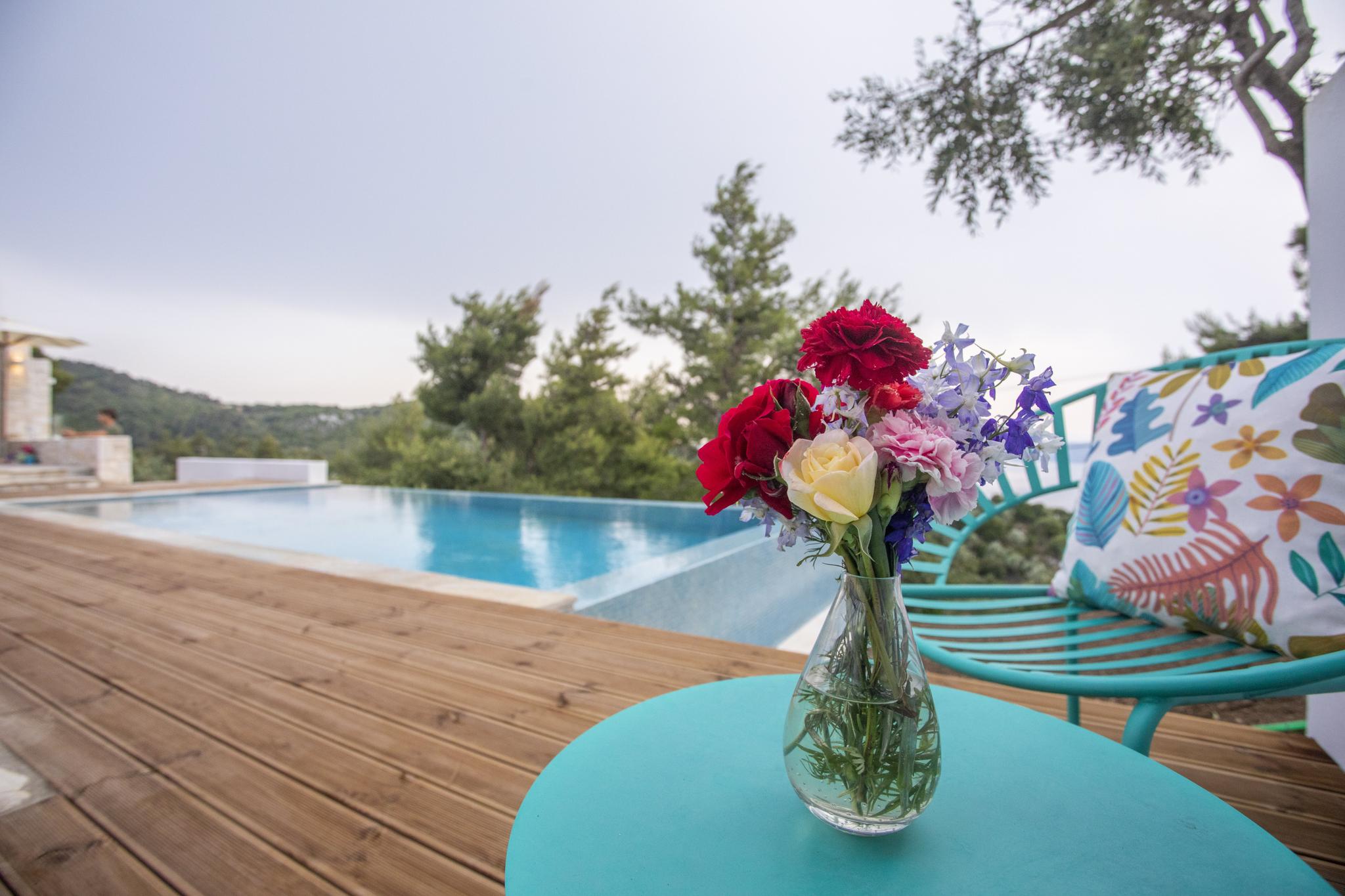
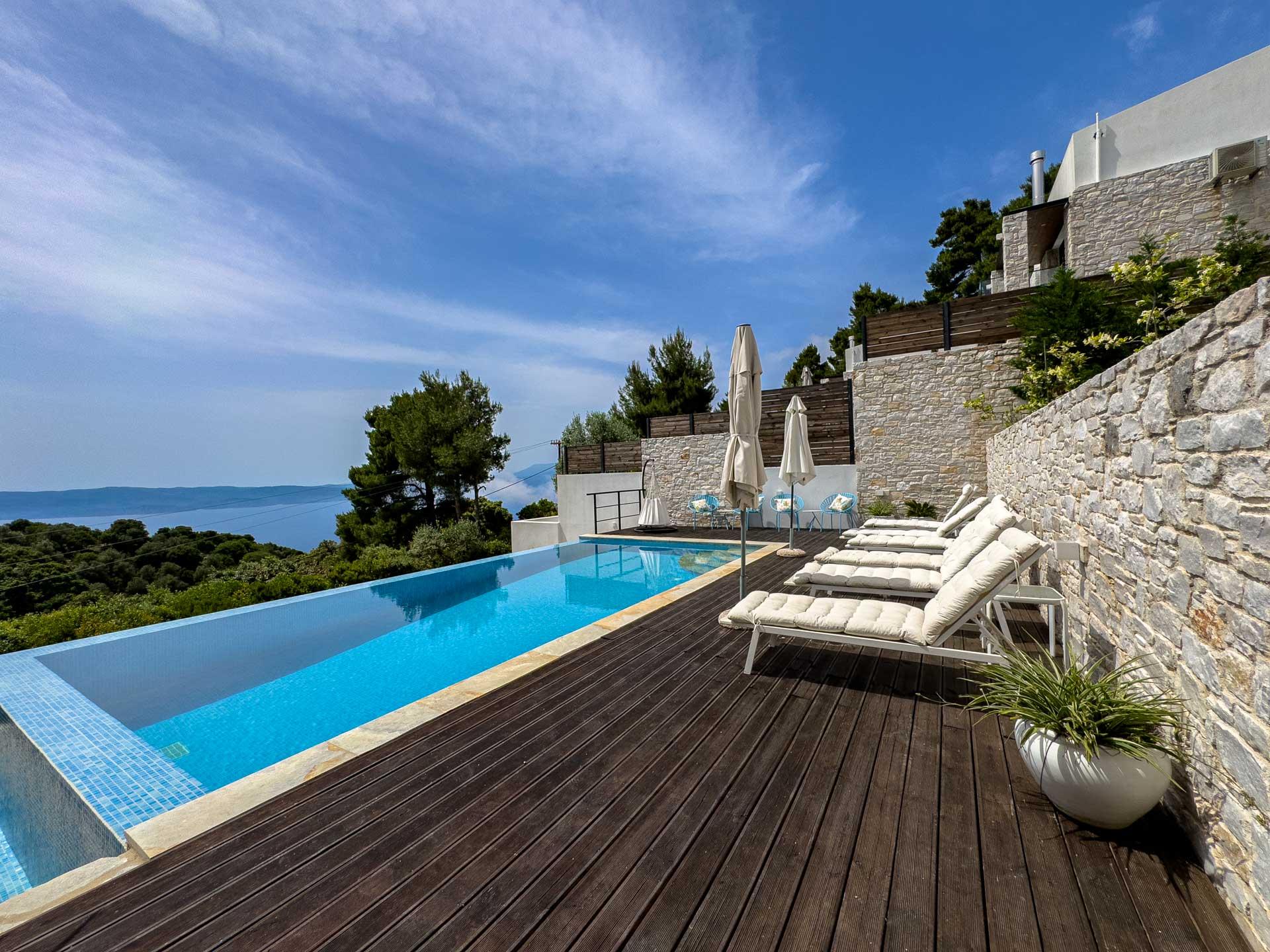
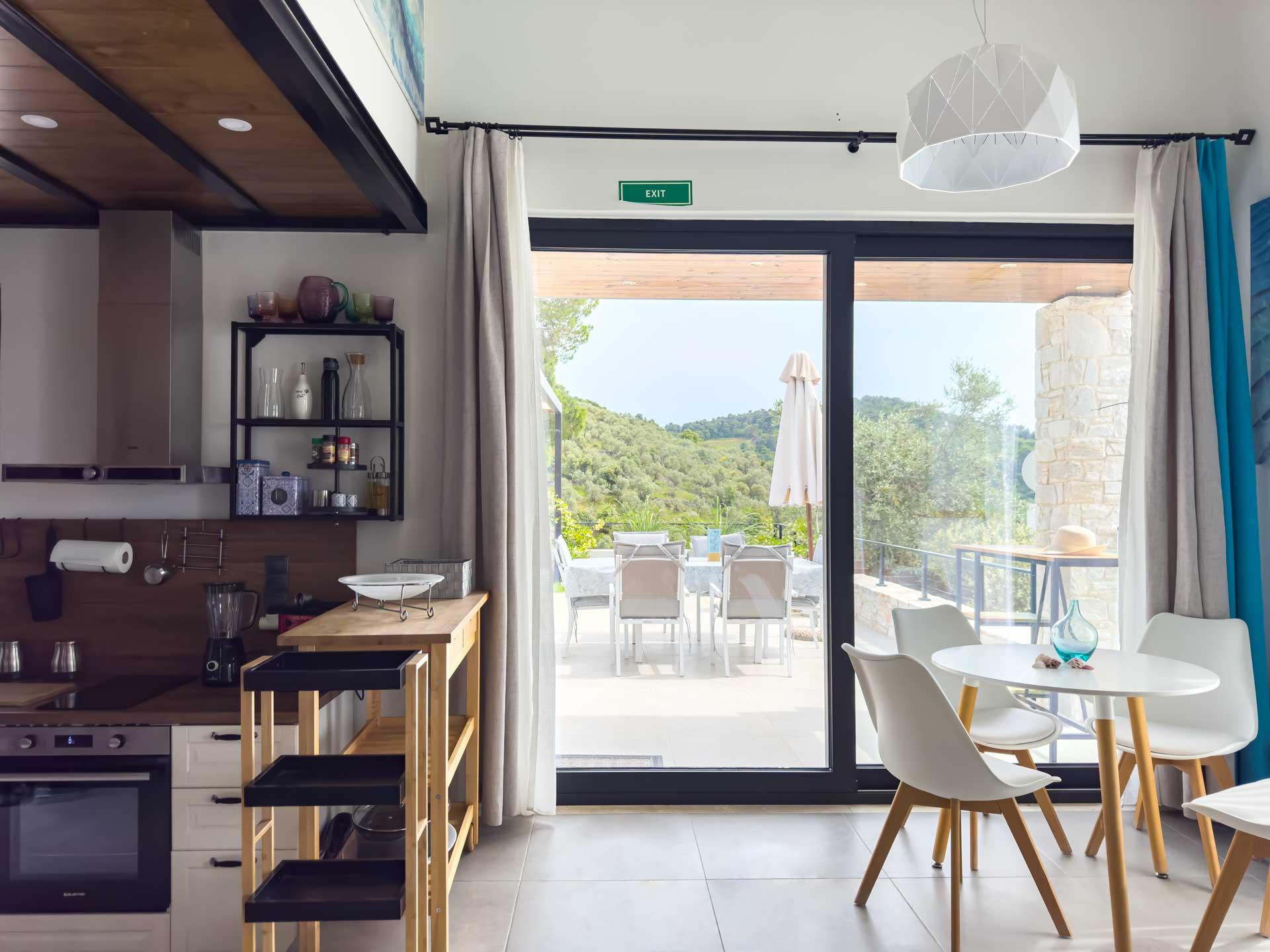
This is the first thing to check before you start packing. At Damari, both Villa Moondancer and Villa Whispering Pines come equipped with bed linens, bath towels, pool towels, toiletries, hairdryers, an iron, and a fully stocked kitchen including dishwasher, microwave, oven, and coffee machine. There is also a washing machine, which means you can pack half the clothing and simply wash mid-stay.
Add to that a BBQ, outdoor dining area, sun loungers, umbrellas, Netflix on flat-screen TVs, free WiFi, air conditioning, and mosquito nets in every room. You can see the full amenities list on our website, but the practical upshot is this: you do not need to pack towels, beach mats, kitchen gadgets, a travel iron, or a hairdryer.
What this leaves you packing is clothing, sun protection, personal electronics, and a few practical items. The list below covers each category.
What Clothing Should You Pack for a Greek Villa Holiday?
Pack light, casual layers with a few smart-casual pieces for evening dining. You will spend most daytime hours in swimwear.
The rhythm of a villa holiday in Greece follows a pattern: swimwear and a cover-up during the day, a quick change for an evening out. Skiathos is a relaxed island -- there is no dress code anywhere, though some of the best restaurants appreciate smart-casual attire at dinner.
Daytime
- Swimwear: 3-4 sets minimum. You will wear a swimming costume almost every day, and having extras means you are never putting on a damp one
- Cover-ups and sarongs: 2-3 pieces that work for the walk between beach and taverna
- Lightweight shorts and T-shirts: Cotton or linen breathe best in 30C+ heat
- A sun hat: Wide-brimmed offers the most protection. Baseball caps leave your neck exposed
- Comfortable walking sandals: For town, beaches, and casual exploring
Evening
- Smart-casual outfits: 2-3 sets. Linen trousers or a summer dress, a collared shirt or blouse. Nothing more formal than this is required anywhere on Skiathos
- A light layer: Even in July, evenings on a restaurant terrace can feel cooler after a day in the sun. A light cardigan or linen jacket works
- Comfortable evening shoes: Flat sandals or loafers. Skiathos Town has cobbled streets and uneven pavements -- heels are impractical
Footwear
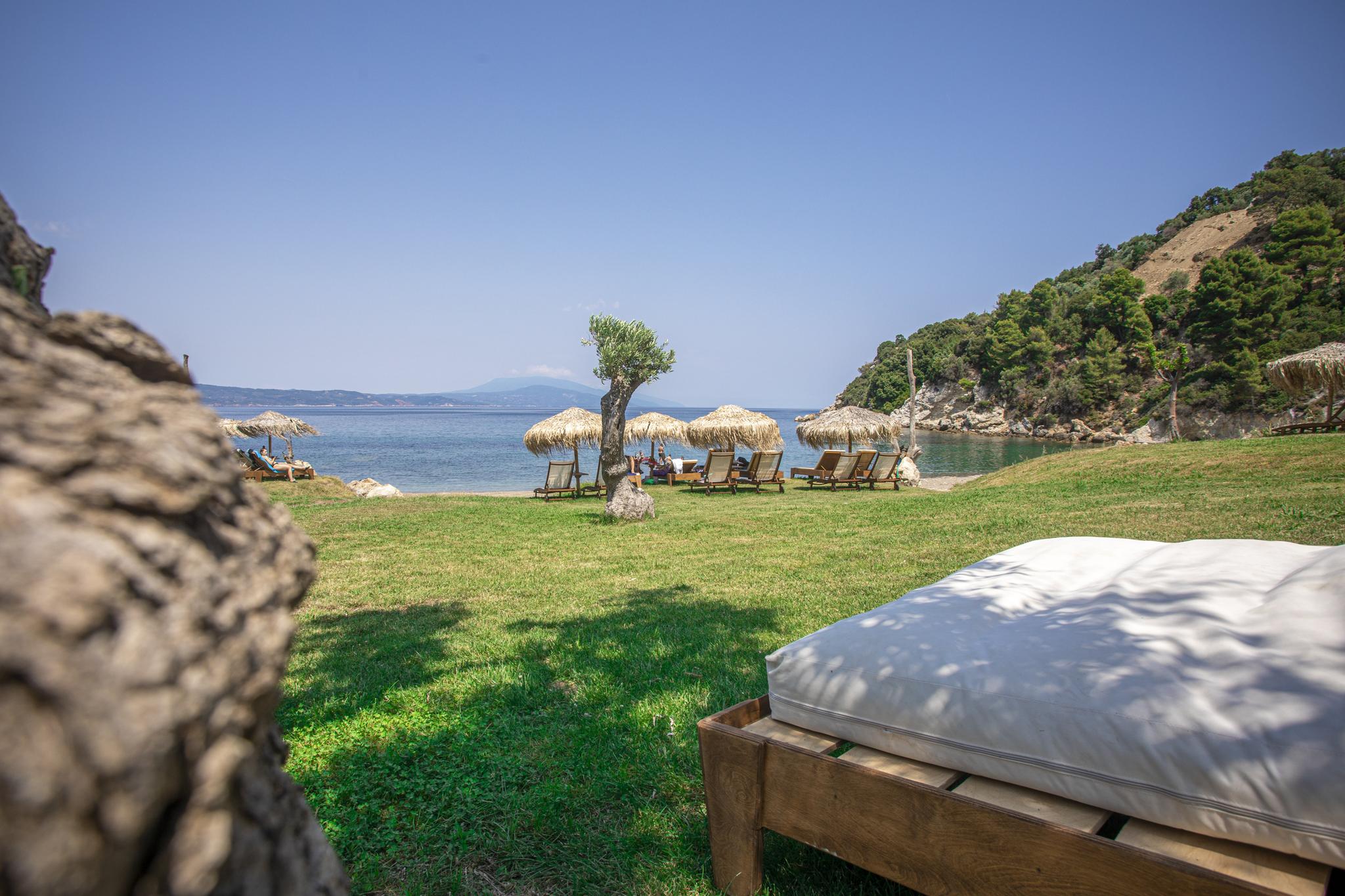
- Water shoes: Essential for pebble beaches. Lalaria Beach has smooth white pebbles that are beautiful but uncomfortable underfoot. Rubber-soled water shoes make a real difference
- Walking shoes or trail runners: If you plan to explore the island's 200km of hiking trails, proper footwear is important. Pine needle trails can be slippery, and some paths are rocky
- Flip-flops: For the pool, the villa terrace, and quick beach visits on sandy shores
What Sun Protection Do You Actually Need?
The UV index on Skiathos reaches 9-10+ in high summer, classified as "Very High" to "Extreme" by the WHO, so sun protection is the most important category in your bag.
Sunburn is the most common health issue for visitors to the Greek islands, and it happens faster than people expect. At a UV index of 9 or above, unprotected fair skin can burn in under 15 minutes.
- SPF 50 sunscreen: Bring a large bottle rather than relying on what you find locally. Greek pharmacies stock good brands, but airport and resort shops charge a premium. Reef-safe formulas are worth choosing for the Mediterranean's marine ecosystem
- Quality sunglasses: Polarised lenses with UV400 protection. You will be around reflected light from water and white buildings all day
- Wide-brimmed hat: Already mentioned in clothing, but it belongs in this list too. A hat with at least 7cm brim protects your face, ears, and neck
- Rash guard or UV swim top: Particularly useful for snorkelling trips, when your back is exposed to direct sun for extended periods. Children should wear one whenever they swim in daylight
- Lip balm with SPF: Often forgotten, always needed
- After-sun or aloe vera: For the inevitable day you miss a spot
What Beach and Water Essentials Should You Bring?
A dry bag, waterproof phone case, and snorkel set are the three items that most improve a Greek beach holiday.
You do not need much for Skiathos's beaches -- most organised beaches rent sunbeds (EUR 10-35 depending on the beach and season) and some hire snorkel equipment. But a few items from home make things smoother.
- Dry bag (10-20L): Keeps your phone, wallet, and car keys safe during boat trips and at unorganised beaches with no lockers. Invaluable on the boat trip to Lalaria
- Waterproof phone case: For photos while swimming or snorkelling. Cheaper and more practical than risking your phone in a zip-lock bag
- Snorkel set: You can hire these on the island, but having your own mask that fits properly makes a genuine difference. The waters around Kastro, Lalaria, and the north coast coves have excellent visibility
- Beach reading: A Kindle or paperback. Afternoons on a villa sun lounger or at a quiet beach are prime reading time
- Reusable water bottle: Tap water in Skiathos is safe for brushing teeth but not ideal for drinking. Refill stations are becoming more common, and a good bottle saves buying plastic
What Tech and Practical Items Do You Need?
An EU power adaptor, offline maps, and your driving licence are the three most commonly forgotten practical items.
- EU power adaptor: Greece uses Type C and Type F sockets (standard European two-pin round plugs). If you are travelling from the UK, US, or Australia, you need an adaptor. Bring at least two -- one for the bedroom, one for the kitchen or living area
- Portable charger / power bank: Useful for long beach days or boat trips when you are away from the villa for 8-10 hours
- Offline Google Maps: Download the Skiathos map before you travel. Mobile signal covers most of the island but drops in some northern areas and on hiking trails. Our getting around Skiathos guide covers the road network in detail
- Driving licence: If you plan to hire a car (and we recommend it for exploring the north coast and quieter beaches), you need a valid driving licence. EU licences are accepted directly. UK, US, and other non-EU visitors should carry an International Driving Permit alongside their home licence, though in practice many hire companies accept a standard licence
- Travel insurance documents: Digital copies on your phone and printed backups. The European Health Insurance Card (EHIC) or UK Global Health Insurance Card (GHIC) covers emergency treatment for eligible visitors, but travel insurance remains essential for repatriation and non-emergency care
What Health and Comfort Items Should You Pack?
Mosquito repellent for evenings and motion sickness remedies for boat trips are the two health items most visitors wish they had packed.
- Mosquito repellent: Evenings on Skiathos, particularly near pine forest and olive groves, bring mosquitoes. DEET-based or picaridin repellent works best. Both Damari villas have mosquito nets fitted in every room, but repellent is useful for outdoor dining on the terrace or at restaurants
- Motion sickness remedies: If you plan to take a boat trip to Lalaria Beach or island-hop to Skopelos (45 minutes by ferry), bring tablets or wristbands. The open sea between the Sporades islands can be choppy, especially when the meltemi wind picks up in July and August
- Basic first aid: Plasters, antiseptic wipes, ibuprofen, antihistamines. Greek pharmacies are excellent and well-stocked, but having basics on hand saves a trip into town for minor issues
- Prescription medications: Bring enough for your entire stay plus a few extra days, in original packaging with the prescription label. Greek pharmacies can supply many medications without a prescription, but do not rely on this for anything essential
- Stomach remedies: A change of diet, olive oil in everything, and enthusiastic holiday eating sometimes result in mild digestive discomfort. Antacids or similar are worth having
What Should You NOT Bring?
The most common packing mistake for Greece is bringing too much. Here is what to leave at home.
- Excessive clothing: You will wear the same rotation of swimwear, shorts, and cover-ups most days. With a washing machine in the villa, 5-7 days of clothing is enough for any length of stay
- Formal wear: No restaurant on Skiathos requires anything beyond smart casual. Leave the suits, cocktail dresses, and dress shoes at home
- Full-size toiletries: Your villa provides basics, and Greek pharmacies and supermarkets stock excellent products -- often Greek brands like Apivita and Korres that are worth trying. Bring only specifics you cannot do without
- Heavy beach gear: Sun loungers, umbrellas, beach mats -- your villa has these for the pool, and organised beaches rent them. A lightweight beach towel or sarong is all you need to carry
- Bulky hairdryers or irons: Provided at the villa
- Too many books: One or two paperbacks or a Kindle. You can swap books at several informal book exchanges in Skiathos Town
- A heavy jacket: Even in May or October, a light waterproof layer is the most you will need
How Does Packing Change by Month?
The difference between a May trip and an August trip is mainly about layers for cooler evenings and the chance of a brief rain shower.
| Item | May/June | July/August | September/October |
|---|---|---|---|
| Light jacket or cardigan | Yes -- evenings drop to 15-19C | Optional -- still 24-26C at night | Yes -- evenings cool to 17-20C |
| Waterproof layer | Light rain jacket (May especially) | Very unlikely to need | Light rain jacket (late October) |
| Long trousers | 2 pairs for evenings | 1 pair, optional | 2 pairs for evenings |
| Swimwear | 3 sets | 4 sets (you'll swim more) | 3 sets |
| Sun protection level | SPF 50, UV index 7-9 | SPF 50, UV index 9-10+ | SPF 30-50, UV index 5-7 |
| Water temperature | 19-23C (wetsuit for sensitive swimmers) | 25-27C | 22-25C |
| Hiking gear | Best hiking months -- pack trail shoes | Too hot for midday hikes | Excellent hiking -- pack trail shoes |
| Mosquito repellent | Moderate need | High need | Moderate need |
May and early June can surprise visitors with cooler evenings. A pashmina or light fleece for sunset cocktails on the terrace is worth the small space it takes.
July and August are pure summer. You will barely wear anything beyond swimwear and light clothing. The challenge is sun protection, not warmth.
September and October bring a gradual cooling that makes the island more comfortable for exploring, hiking, and longer days away from the pool. Pack as you would for May/June, with slightly more emphasis on layers as October progresses.
Frequently Asked Questions
Do I need to pack towels for a villa holiday in Greece?
No. Quality villas provide bath towels, hand towels, and pool towels. At Damari, fresh towels are included in every stay and changed regularly. This is one of the biggest space-savers when packing for a villa versus a budget self-catering apartment.
What plug adaptor do I need for Greece?
Greece uses Type C and Type F sockets, which are the standard European two-pin round plugs. Visitors from the UK, US, and Australia need an adaptor. Universal travel adaptors work fine, but a simple European adaptor is cheaper and more compact. Bring at least two.
Is tap water safe to drink in Skiathos?
Skiathos tap water is generally safe but not recommended for drinking due to mineral content and taste. Most residents and visitors drink bottled or filtered water. Bring a reusable bottle and buy large 5L bottles from supermarkets to refill it, which saves money and reduces plastic.
What shoes do I need for Greek beaches?
It depends on the beach. Sandy beaches like Koukounaries and Troulos are comfortable barefoot. Pebble beaches like Lalaria and some north coast coves require water shoes. If you plan to hike, bring trail runners or sturdy walking shoes with grip -- pine needle paths are slippery when dry.
Do I need a car on Skiathos?
Not strictly, but it helps. Buses run frequently along the south coast for EUR 2-3, covering 27 stops. But the quieter north coast beaches, the hiking trailheads, and restaurants in the Kechria area are much easier to reach by car. Rental costs range from EUR 30-70 per day depending on season.
How much sunscreen should I bring to Greece?
More than you think. A family of four using SPF 50 properly will go through a 200ml bottle every 2-3 days. For a week-long stay, bring at least two large bottles per person. Greek pharmacies stock good European brands, but they cost more than buying in advance at home.
Should I pack snorkel gear or hire it on the island?
If you snorkel regularly, bring your own mask -- a well-fitting mask makes more difference than any other piece of equipment. Fins and snorkels can be hired locally for about EUR 10-15 per day. If you only plan to snorkel once or twice, hiring everything on the island is simpler.
More on getting around: Our transport guide covers car hire, buses, taxis, and boat services across the island.
See the villas: Browse our photo gallery to see what is already waiting for you at Damari.
At Damari Luxury Villas, we have hosted over 500 guests since 2019, and the most common feedback is that people packed too much. Our two private villas in the Kechria area come fully equipped with everything from pool towels to Netflix -- so your suitcase can focus on the essentials. Check the full amenities list, explore our villas, or contact us to start planning your stay.