A coolcation is a holiday planned around cooler temperatures instead of maximum heat, and in Greece the formula is straightforward: go further north, choose a green island over a bare one, and travel outside August. That combination — latitude, tree cover and timing — is what separates a Greek summer you enjoy from one you spend indoors waiting for 6pm.
For 2027, the practical shortlist is the northern Aegean and Sporades, the Ionian, and the mainland coasts of Pelion and Halkidiki. None of them require giving up warm sea, good food or long evenings. They just require booking differently than most people did five years ago.
Key Takeaways
- A coolcation prioritises comfortable temperatures and quiet over guaranteed heat; the trend moved firmly mainstream during summer 2026.
- Northern Greek destinations sit 3 to 4 degrees of latitude above the southern Cyclades and Crete, which translates into a meaningful temperature gap in July and August.
- Forest cover matters as much as latitude: shaded ground stays cooler than exposed rock, and Skiathos is roughly 60% pine forest.
- The best 2027 windows are late May to late June and September to early October, when sea temperatures are comfortable but daytime highs typically sit in the mid to high twenties.
- Coolcation-proofing a villa means shade, a pool, cross-ventilation and a daily rhythm that avoids 13:00 to 17:00 outdoors — not just air conditioning.
What Is a Coolcation, and Why Is It Driving 2027 Bookings?
A coolcation is a deliberate choice of cooler destination or cooler season, usually higher latitude, higher altitude or heavily forested, and it now shapes how a large share of European summer trips get planned.
The term had been circulating for a couple of years, but summer 2026 was when it stopped being a headline and became a booking pattern. Repeated heat episodes across southern Europe made the standard Mediterranean holiday harder to enjoy — midday sightseeing became something to survive, beaches emptied between noon and five, and travellers who had spent good money on a week outdoors found themselves indoors.
Two things happened at once. First, people started shifting north within Europe — Scandinavia, the Baltics, Scotland, the Alps. Second, and more relevant here, people started shifting north within Mediterranean countries rather than abandoning them. You do not have to swap Greece for Norway to get a cooler holiday. Greece spans roughly five degrees of latitude, and the difference between its northern and southern extremes in August is real.
Running in parallel is the crowd question. Travellers have been actively moving away from overtourism hotspots toward places that still feel like themselves in high season. Heat and crowds compound each other: a packed beach at 34°C is a different experience from a half-empty one at 28°C. For 2027, most people making a coolcation decision are solving for both at once.
Why Do Latitude and Forest Cover Make an Island Cooler?
Two factors decide how hot a Greek island actually feels: how far north it sits, and how much of it is shaded. Latitude sets the baseline, and vegetation determines whether the ground radiates heat back at you all afternoon.
Latitude first. Here is the spread across popular Greek destinations:
| Destination | Approx. latitude | Landscape |
|---|---|---|
| Halkidiki coast | 40.1°N | Pine and beach, mainland |
| Corfu | 39.6°N | Green, olive and cypress |
| Pelion peninsula | 39.4°N | Forested mountain to sea |
| Skiathos and Sporades | 39.2°N | Around 60% pine forest |
| Paros / Naxos | 37.0°N | Exposed, low scrub |
| Santorini | 36.4°N | Volcanic rock, minimal shade |
| Crete (south coast) | 35.0°N | Hot, often the warmest in Greece |
Three degrees of latitude is not a dramatic gap on paper, but at the height of summer it usually means a few degrees of air temperature and, more importantly, a shorter and less intense peak-heat window.
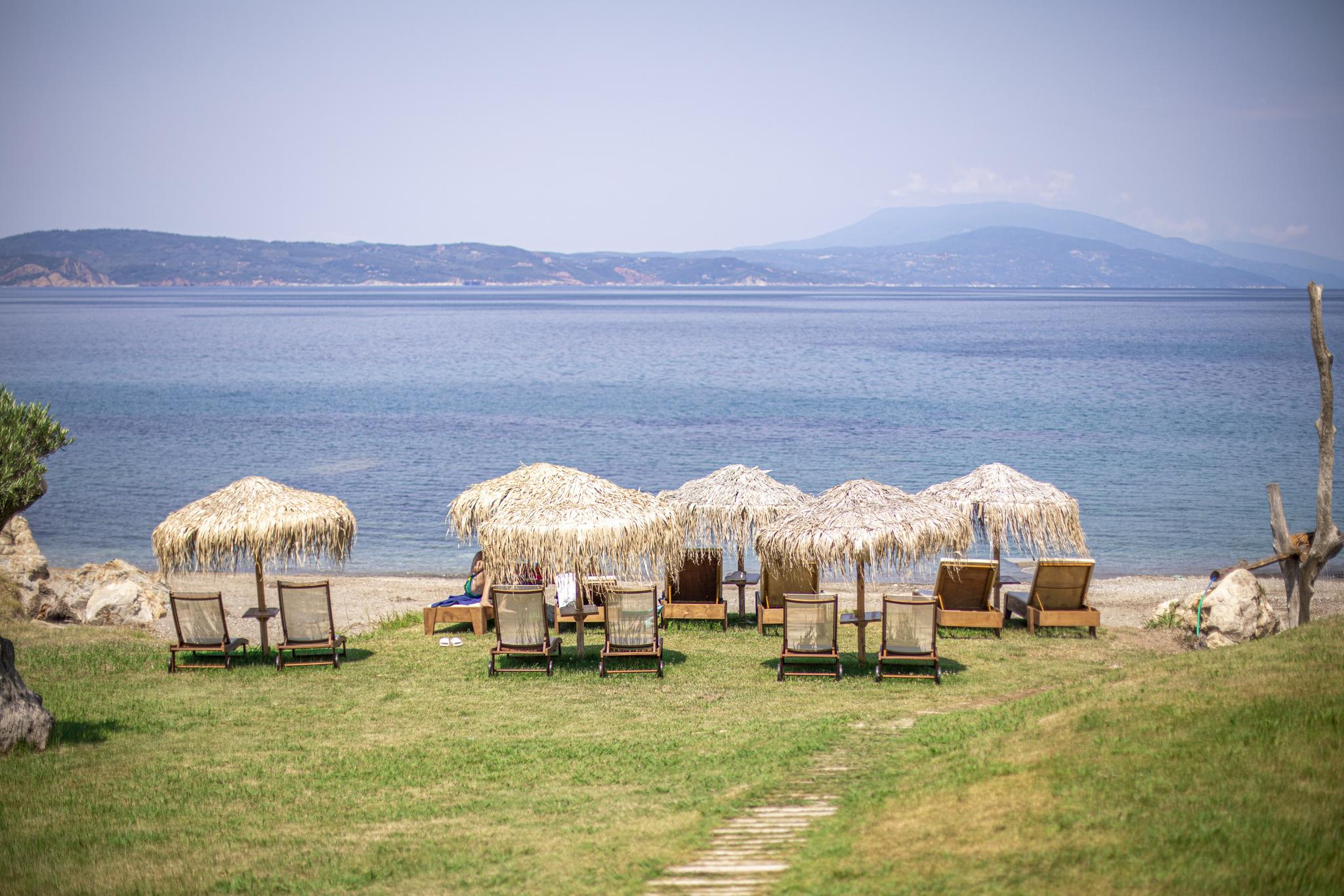
Then there is ground cover, which is where the numbers understate the difference. Skiathos is around 60% covered in pine forest — one of the greenest islands in Greece. Aleppo pine canopy shades roads, walking paths, hillsides and even parts of the beaches at Koukounaries and Kechria. Bare Cycladic rock, by contrast, absorbs sun all day and releases it back into the evening. Two islands can record the same 31°C and feel four or five degrees apart in practice.
The third factor is wind. The meltemi, the northerly summer wind, cools the whole Aegean through July and August. In the central Cyclades it can also blow hard enough to cancel ferries and shut down beach days. The Sporades sit in a more sheltered pocket of the northern Aegean, close to the mainland and partly protected by the Pelion massif, so they typically get the cooling without the worst of the gusts. On the days it does blow, the south coast of Skiathos stays usable while the north coast takes the brunt.
If you want the full month-by-month picture rather than the summary, our Skiathos weather and sea temperature guide has the detail.
Which Months Should You Book for a 2027 Coolcation?
Late May to late June and September to early October are the two windows that give you warm sea, comfortable air and manageable crowds. August delivers the highest temperatures, the highest prices and the least availability.
| Window | Typical daytime high | Sea | Crowds | Notes |
|---|---|---|---|---|
| Late May | 22–26°C | Refreshing | Low | Green landscape, some tavernas still opening |
| June | 25–29°C | Comfortable | Moderate | Longest days, best all-round balance |
| July–August | 30–35°C | Warm | Peak | Hottest, busiest, most expensive |
| September | 25–30°C | Warmest of the year | Falling | Widely the best single month |
| Early October | 21–25°C | Still swimmable | Low | Quiet, some closures late in the month |
The counterintuitive part for first-timers is that September usually beats July for swimming. The sea has absorbed an entire summer of heat and lags the air by several weeks, so you get warm water and cooler evenings at the same time. Our September guide to Skiathos covers what stays open and what changes as the month goes on.
For 2027 specifically, book earlier than you think. Shoulder-season demand has risen with the coolcation trend, so the best villas in June and September now go months ahead — the old habit of grabbing a September deal in July no longer works reliably. Our Greek islands shoulder season guide explains the trade-offs, including which services scale back.
Which Greek Destinations Actually Work as Coolcations?
The realistic Greek coolcation shortlist is the Sporades, the Ionian, Pelion and Halkidiki. Each trades something different, and none of them are strictly cool — they are simply cooler and shadier than the classic postcard south.
Skiathos and the Sporades. Pine forest, sheltered position, short flights from northern Europe, and a 12km by 6km island where nothing is more than 20 minutes away. Skopelos is greener still and quieter; Alonissos has the marine park and the fewest people. The trade-off: fewer big-name archaeological sites than Crete or the Dodecanese.
Corfu and the Ionian. Similar latitude, lush and green, with Venetian architecture and a much larger island to explore. Corfu is busier than the Sporades in peak weeks and gets more cruise traffic, but the northern and western coasts stay comfortable. We compare the two directly in our Skiathos vs Corfu guide.
Pelion. Mainland, mountainous and genuinely cool at altitude — you can be in beech forest at 800m in the morning and on an Aegean beach by lunch. The trade-off is that you need a car, and the driving is slow.
Halkidiki. The furthest north of the four, with pine right down to the sand and easy access via Thessaloniki. Less island character, more resort development on the busier legs of the peninsulas. Our Skiathos vs Halkidiki comparison sets out where each one wins.
To be fair to the south: Santorini's caldera and Crete's gorges and Minoan sites are not replicated anywhere on this list. If those are your reason for going, go — just go in May or October rather than August. A coolcation is a shift in timing as much as geography. If you are still deciding between destinations for the year ahead, our best Greek island for 2027 guide runs through the options by traveller type, and the quietest Greek islands guide covers the crowd side of the equation.
How Do You Heatwave-Proof a Villa Holiday?
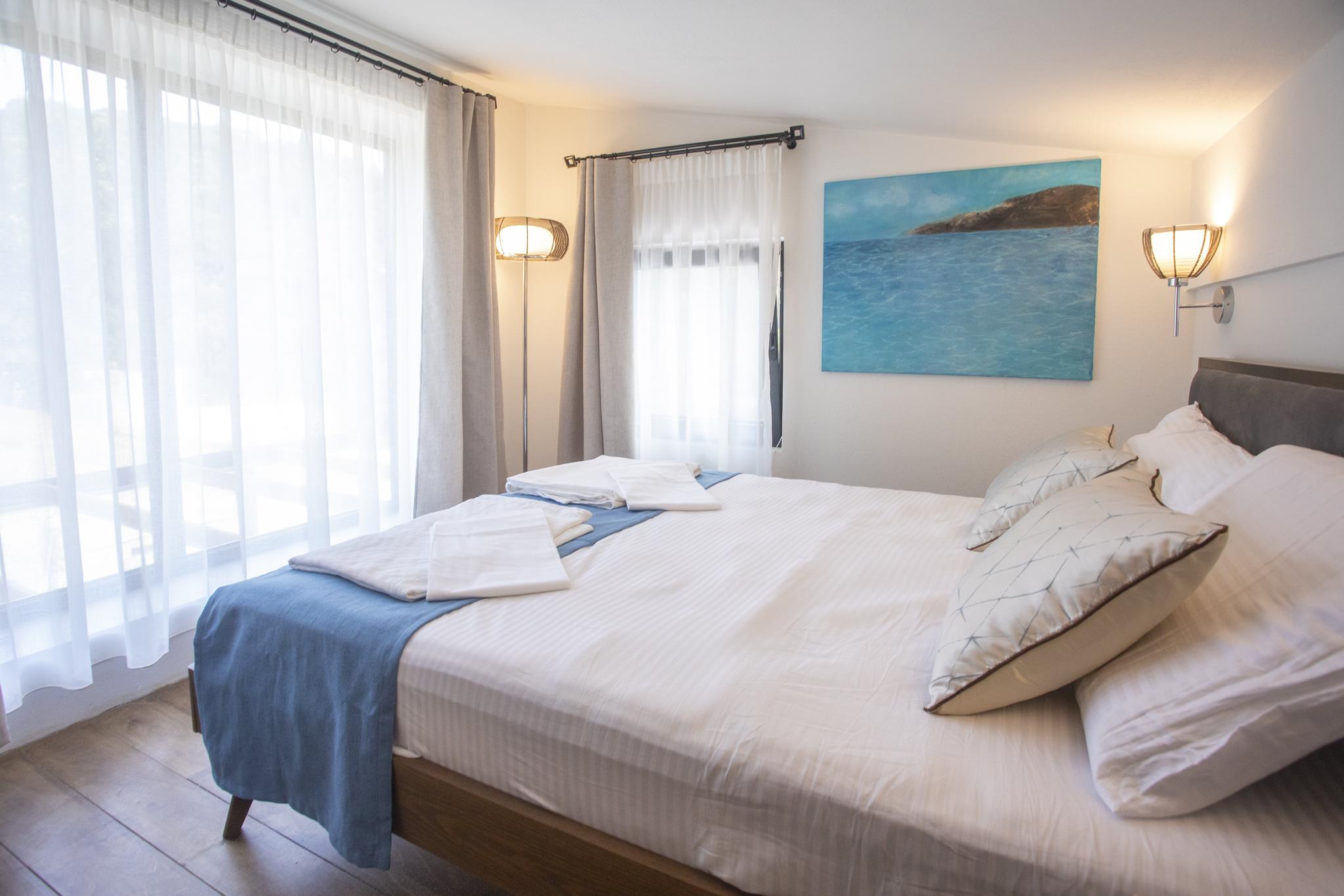
The accommodation matters more on a coolcation than on a standard beach holiday, because you will spend the hottest hours of the day at it rather than out. Shade, water and airflow are the three things to check before you book.
Air conditioning is the baseline, not the answer. A villa that only works with the doors shut and the units running is a poor coolcation base. What you actually want:
- A pool you can use at 15:00. Unheated pools are ideal in summer — they sit well below air temperature and do the cooling work for you.
- Genuinely shaded outdoor space. A pergola or tree canopy over the dining terrace is the difference between eating outside at lunch and retreating indoors.
- Cross-ventilation. Rooms with windows on two sides catch the evening breeze, which on a hillside arrives reliably after sunset.
- Elevation and aspect. Hillside positions above the coast road catch more air movement than properties down at sea level.
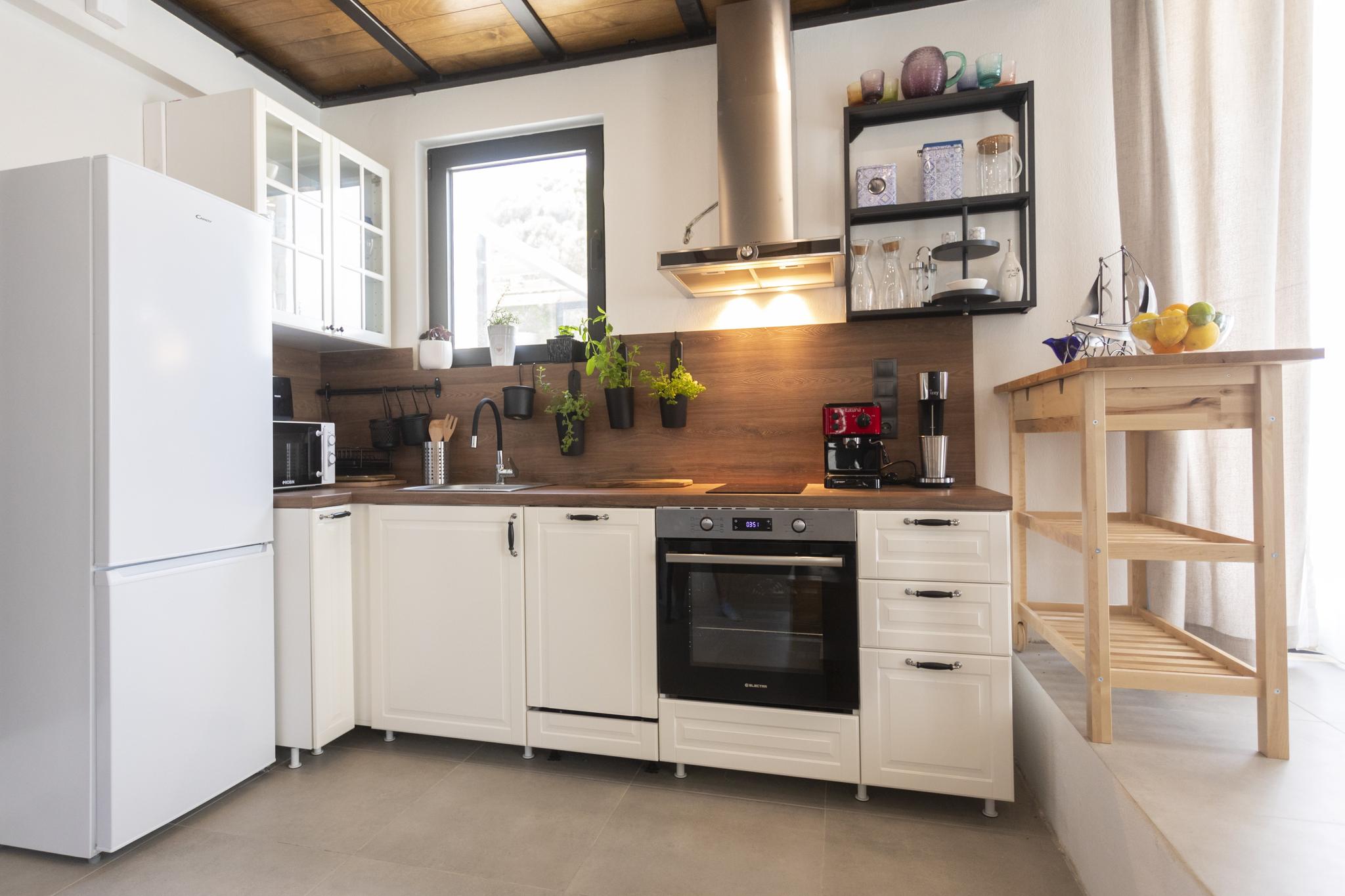
- A kitchen you would actually cook in. Being able to eat at home at midday means you are not driving into town at the hottest hour.
Then adopt the local rhythm rather than fighting it. Beach or walk before 11:00, long lunch and swim at the villa from 13:00 to 17:00, town and tavernas from 18:30. Greeks structure the day this way for a reason, and visitors who adopt it report far better holidays than those who try to sightsee through the afternoon.
This is where our own setup happens to fit the brief. Villa Whispering Pines sits inside the pine forest itself, with terraces shaded by the canopy, while Villa Moondancer occupies the highest point of the retreat and catches the sea breeze coming up the hillside. Both are in the Kechria area, 6km from town and the airport, with private infinity pools, fully equipped kitchens, BBQ and outdoor dining, and mosquito nets in every room — which matters more than people expect when you want to sleep with the windows open.
For a deeper look at the climate logic behind all of this, our climate-smart villa escape article goes into the microclimate detail.
Frequently Asked Questions
What is a coolcation?
A coolcation is a holiday chosen for cooler temperatures rather than maximum heat. Travellers pick higher latitudes, higher altitudes, forested or coastal destinations, and shoulder-season dates. The term moved from niche to mainstream during summer 2026 as repeated Mediterranean heat episodes made midday sightseeing and beach days uncomfortable across southern Europe.
Which Greek islands are coolest in summer?
The northern islands are consistently the coolest: the Sporades (Skiathos, Skopelos, Alonissos), Thassos, Samothraki, and the Ionian group including Corfu. They sit roughly 3 to 4 degrees of latitude further north than Crete and the southern Cyclades, and most have substantial forest cover that keeps surface temperatures down.
Is Skiathos cooler than the Cyclades?
Generally, yes — modestly in raw air temperature and noticeably in how the heat feels. Skiathos sits at about 39.2°N compared with 36.4°N for Santorini, and around 60% of the island is pine forest. Shade over roads, beaches and villa terraces makes a bigger practical difference than the two or three degrees on the thermometer.
When should I book a coolcation in Greece for 2027?
Late May to late June and September to early October are the sweet spots. Sea temperatures are comfortable from June onwards and stay warm through September and often into October, while daytime highs typically sit in the mid to high twenties rather than the mid thirties. Book villas 6 to 9 months ahead for those windows.
Does a coolcation mean cold swimming?
No. On the Sporades the sea is usually swimmable from late May through October. Early June water is refreshing rather than warm, June to July is comfortable, and September is often the best month of the year — the sea has absorbed the whole summer's heat while the air has already eased.
Is the meltemi wind good or bad for a coolcation?
Both. The northerly meltemi cools the Aegean through July and August, but in the Cyclades it can blow hard enough to disrupt ferries and make beaches unpleasant. The Sporades sit in a more sheltered part of the northern Aegean, so they usually get the cooling effect without the most extreme gusts.
Will coolcation destinations be more expensive in 2027?
Demand for northern and shoulder-season options has risen, so the cheapest August-only pricing logic no longer applies. Even so, late May, June and September rates for villas and flights are typically well below peak July and August, and booking early in the year secures the better properties.
Choosing your island: Our best Greek island for 2027 guide matches destinations to traveller types.
Timing it right: The shoulder season guide covers what opens, closes and costs less outside peak weeks.
Avoiding the crowds: See the quietest Greek islands for 2026 and beyond.
At Damari Luxury Villas, the coolcation idea is simply how we have always lived here — the forest does the work, and the day bends around the heat rather than through it. Our two private villas in the Kechria area sit among pine forest and olive groves, each with a private infinity pool, fully equipped kitchen, and shaded outdoor dining with BBQ facilities, 15 minutes from both the airport and Skiathos Town. If 2027 is the year you plan around comfort rather than peak heat, this is a good place to do it. Explore our villas or contact us to check availability for June and September 2027.
Frequently asked questions
What is a coolcation?
A coolcation is a holiday chosen for cooler temperatures rather than maximum heat. Travellers pick higher latitudes, higher altitudes, forested or coastal destinations, and shoulder-season dates. The term moved from niche to mainstream during summer 2026 as repeated Mediterranean heat episodes made midday sightseeing and beach days uncomfortable across southern Europe.
Which Greek islands are coolest in summer?
The northern islands are consistently the coolest: the Sporades (Skiathos, Skopelos, Alonissos), Thassos, Samothraki, and the Ionian group including Corfu. They sit roughly 3 to 4 degrees of latitude further north than Crete and the southern Cyclades, and most have substantial forest cover that keeps surface temperatures down.
Is Skiathos cooler than the Cyclades?
Generally, yes — modestly in raw air temperature and noticeably in how the heat feels. Skiathos sits at about 39.2°N compared with 36.4°N for Santorini, and around 60% of the island is pine forest. Shade over roads, beaches and villa terraces makes a bigger practical difference than the two or three degrees on the thermometer.
When should I book a coolcation in Greece for 2027?
Late May to late June and September to early October are the sweet spots. Sea temperatures are comfortable from June onwards and stay warm through September and often into October, while daytime highs typically sit in the mid to high twenties rather than the mid thirties. Book villas 6 to 9 months ahead for those windows.
Does a coolcation mean cold swimming?
No. On the Sporades the sea is usually swimmable from late May through October. Early June water is refreshing rather than warm, June to July is comfortable, and September is often the best month of the year — the sea has absorbed the whole summer's heat while the air has already eased.
Is the meltemi wind good or bad for a coolcation?
Both. The northerly meltemi cools the Aegean through July and August, but in the Cyclades it can blow hard enough to disrupt ferries and make beaches unpleasant. The Sporades sit in a more sheltered part of the northern Aegean, so they usually get the cooling effect without the most extreme gusts.
Will coolcation destinations be more expensive in 2027?
Demand for northern and shoulder-season options has risen, so the cheapest August-only pricing logic no longer applies. Even so, late May, June and September rates for villas and flights are typically well below peak July and August, and booking early in the year secures the better properties.
Sources & last checked
- Runway Live — coolcation trend, summer 2026 (Background on the coolcation trend and the shift toward cooler destinations in 2026)
- Travel And Tour World — travellers leaving overtourism hotspots (Reporting on travellers moving away from overcrowded destinations toward quieter alternatives)
- Etesian / meltemi wind (Wikipedia) (Background on the northerly summer wind that cools the Aegean)
- Skiathos (Wikipedia) (Geography, latitude and pine forest cover of Skiathos)